For more than five decades, North American powertrain strategy was shaped more by regulation than by the road. Compliance was king, setting the pace by driving investment cycles, product plans, and engineering priorities for the region.
But this is changing. And driven by this change, we find ourselves coming back to the only question that ultimately matters: What does the customer actually want?
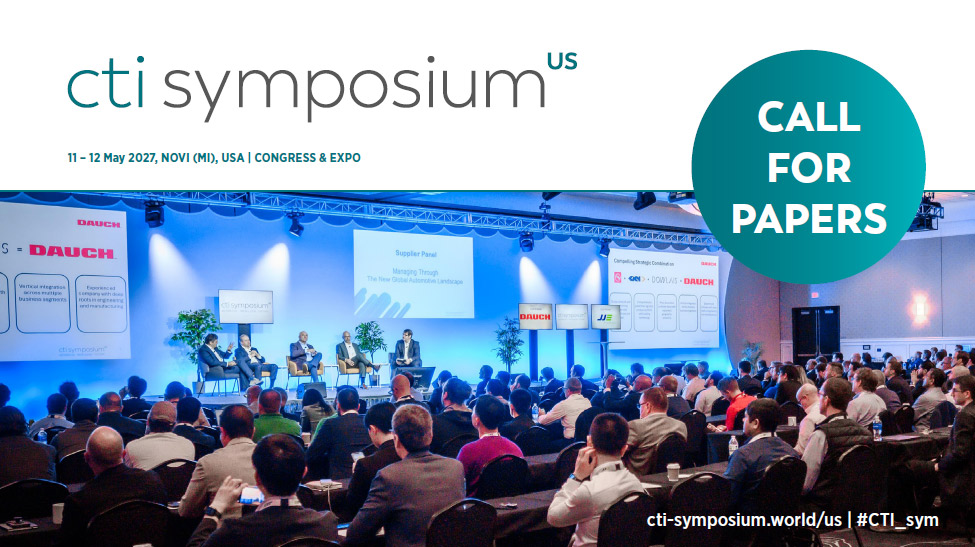
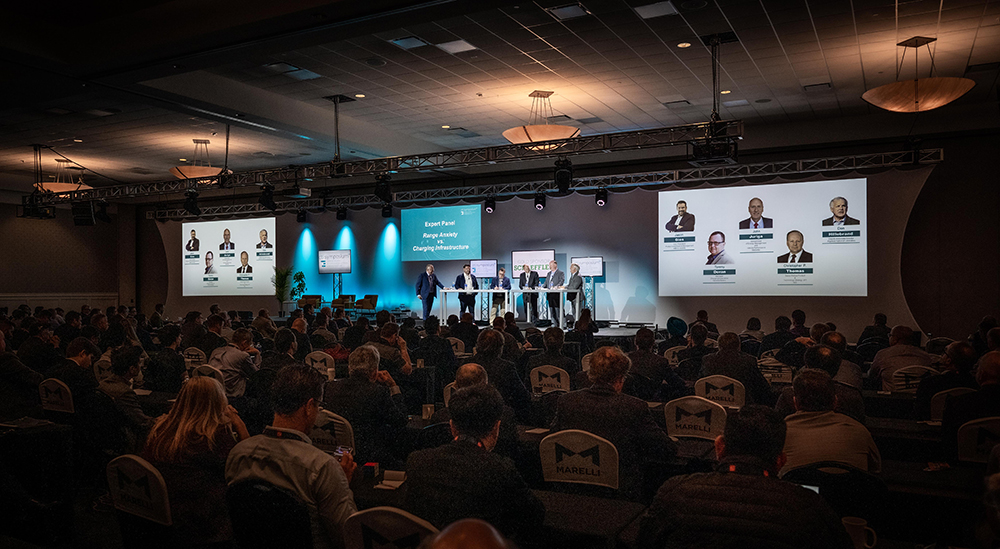
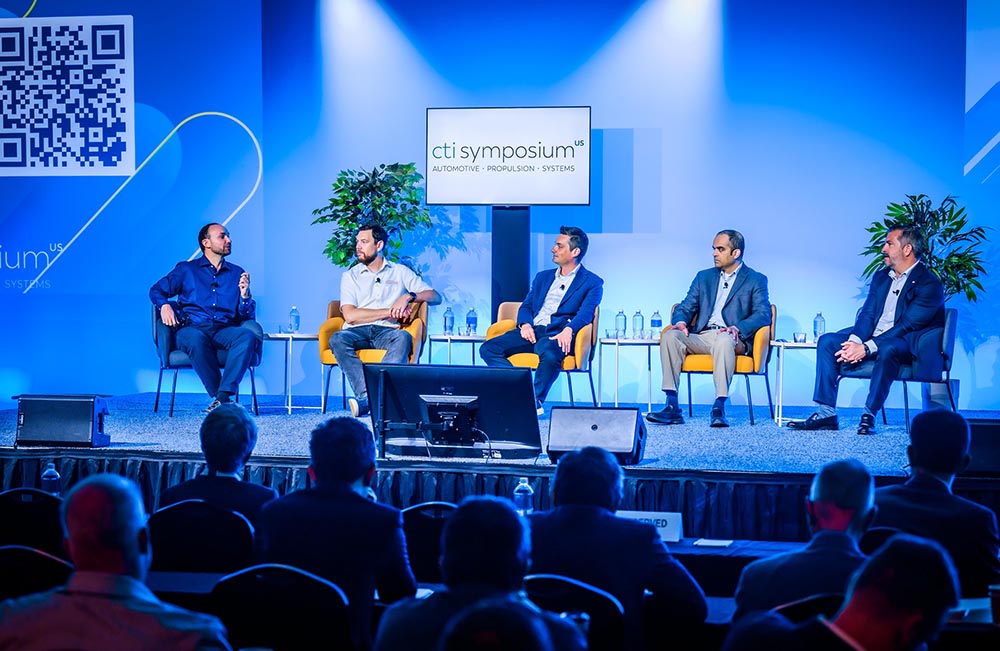
CTI SYMPOSIUM USA IS THE KEY MEETING POINT FOR GLOBAL FORWARD THINKERS IN AUTOMOTIVE POWERTRAIN DEVELOPMENT – FROM PASSENGER CARS TO HEAVY-DUTY VEHICLES.
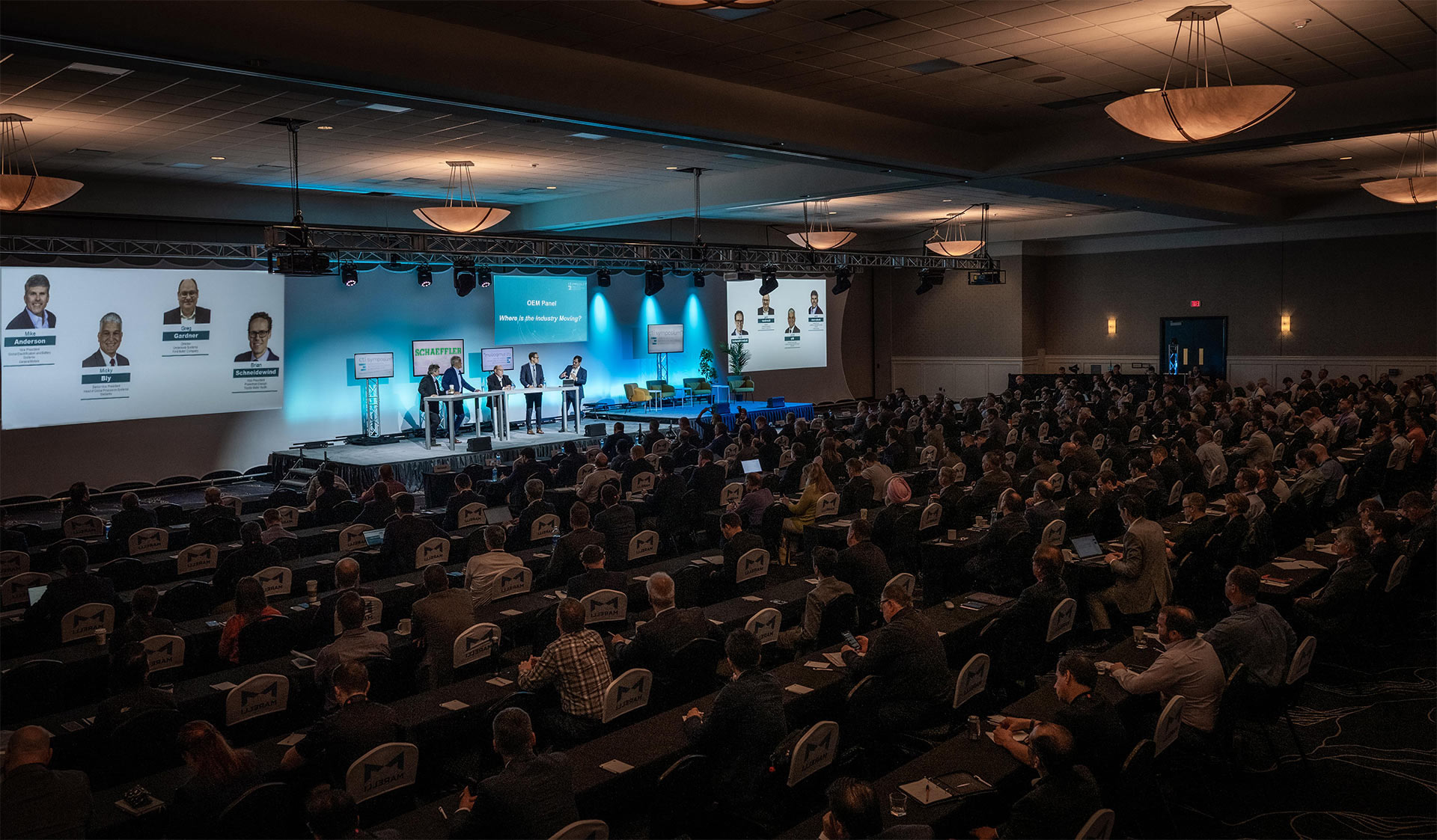
Plenary Speakers and Panelists 2026
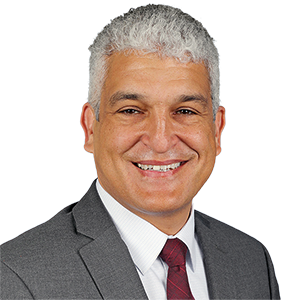
Micky BlySenior Vice President Propulsion Systems – Stellantis
Jordan ChobyGroup Vice President Powertrain Engineering – Toyota
Jon DarrowVice President of the North American Tech Center – Stellantis
Joe FadoolPresident & CEO – BorgWarner
Ramiro GutierrezPresident – ZF North America
Ingo ScholtenCTO – HORSE Powertrain
Paul ThomasPresident, Bosch in North America & President, Bosch Mobility – Americas
Luca ZampieriEngineering Director US – Neural Concept
The Expert Summit for a Sustainable Future Mobility
Only together we can create a sustainable future mobility. CO2 reduction is critical for automotive drivetrain. Here the battery electric drive using renewable energy is the focus. What can we do to increase efficiency and reliability, reduce cost and at the same time reduce the upstream CO2?
At CTI SYMPOSIUM the automotive industry discusses the challenges it faces and promising strategies. Latest solutions in the fields of electric drives, power electronics, battery systems, e-machines as well as the manufacturing of these components and supply chain improvements are presented. For the bigger picture market and consumer research results as well as infrastructure related topics supplement the exchange of expertise.
CTI SYMPOSIA drive the progress in individual and commercial automotive transportation. Manufacturer, suppliers and institutions are showing how to master the demanding challenges.
450+ INTERNATIONAL DELEGATES, EXHIBITORS & SPEAKERS
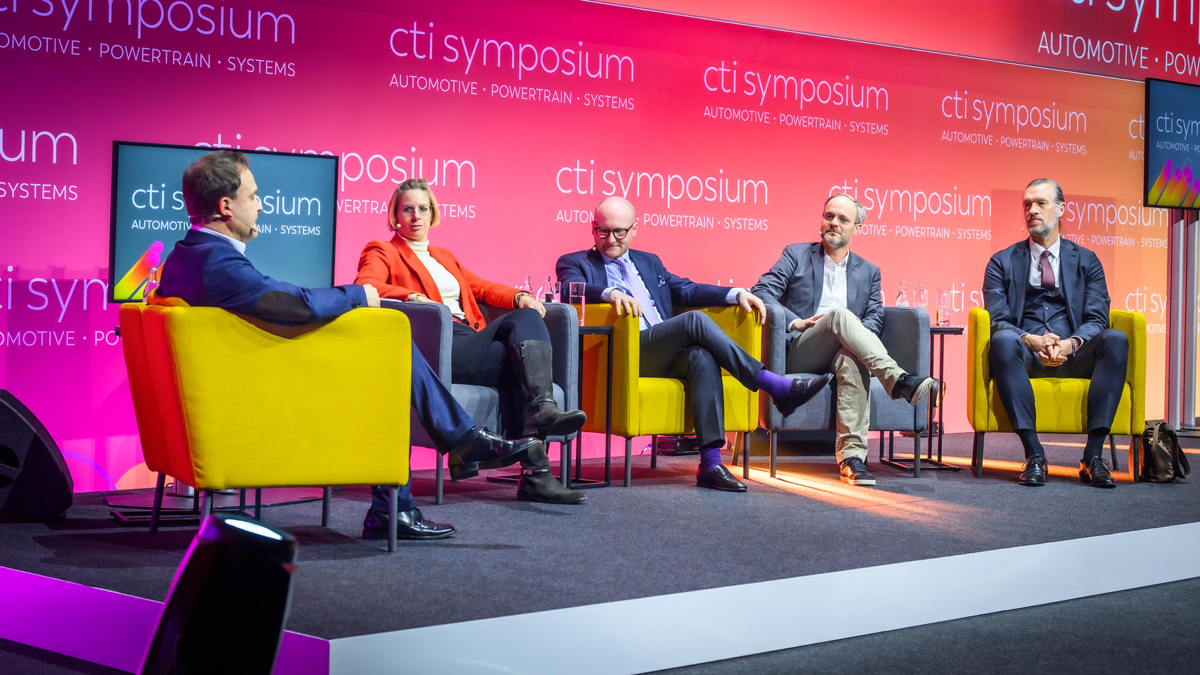
Development work in electric motors and drives remains highly innovative, range extenders are finding their place beyond China, too, and artificial intelligence is increasingly conquering cars and powertrain technologies. A review of the 28th CTI Symposium, Automotive Powertrain Systems, Berlin, in December 2025. Report: Gernot Goppelt, CTI Correspondent
Development work in electric motors and drives remains highly innovative, range extenders are finding their place beyond China, too, and artificial intelligence is increasingly conquering cars and powertrain technologies. A review of the 28th CTI Symposium, Automotive Powertrain Systems, Berlin, in December 2025.
Report: Gernot Goppelt, CTI Correspondent
After more than a century, can electric motors develop any further? Yes and no, said Prof. Malte Jaensch, chair of the CTI Symposium Berlin, in his opening address. No, because technologies like axial flux machines were indeed invented a long time ago. And yes, because automobile powertrain electrification was now sending fresh development impulses. The ongoing development of various types of electric motors and drive units was one of three key topics in Berlin. It featured plenary presentations from Mercedes, Rimac, and Yasa, contributions from young startups, and many of the 77 technical deep-dive lectures, arranged in 13 parallel sessions.
Another major topic was Artificial Intelligence, which was discussed in greater depth and breadth than ever before. Themes ranged from AI-based agents or in-car assistants to AI as a tool for improving and streamlining automotive development processes.
Just shortly after the symposium, the EU Commission announced its proposals for the future of ICEs after 2035. Essentially, these require manufacturers to make new car fleets only 90 percent emissions-free rather than 100 percent. This could create opportunities for REEVs (Range-Extended Electric Vehicles) in Europe as well. REEVs for passenger and even commercial cars were a third major subject at the symposium.
REEV as a BEV variant
In China, for China
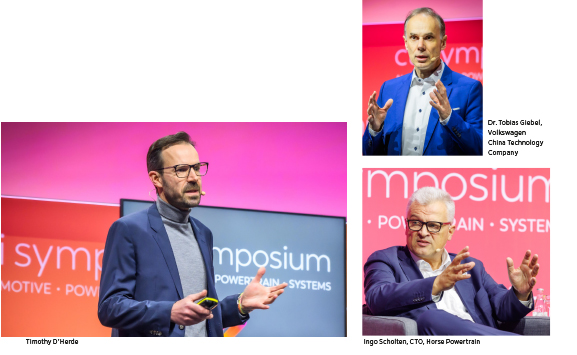
Dr. Tobias Giebel of Volkswagen China Technology Company (VCTC) kicked off the plenary sessions with his presentation entitled “Chinese Powertrain System Trends.” VCTC is a Volkswagen R&D center in Hefei. It opened in 2024 and focuses entirely on a ‘China for China’ approach. Giebel began by briefly discussing NEVs (New Energy Vehicles), noting that they encompass three drive concepts that are all equally supported: BEV (Battery Electric Vehicle), REEV (Range-Extended Electric Vehicle), and PHEV (Plug-in Hybrid Electric Vehicle). One difference between REEVs and PHEVs is that the former are only serial-drive, whereas PHEVs also permit a direct connection from the ICE to the wheels. Together, the three types of NEVs accounted for 56 percent of the market share in China. Since October 1, 2025, VW has been developing its NEV drive systems entirely on-site at VCTC. In line with the ‘BEV first’ approach, BEVs, REEVs, and PHEVs all share a common vehicle platform. Giebel said the three top criteria for tomorrow’s NEVs were affordable and fast-charging LFP traction batteries, new dedicated hybrid engines (DHEs) with over 40% thermal efficiency, and electric drives with SiC-based, pulse-optimized inverters. Turning to opportunities for REEVs in Europe, Giebel shared two interesting insights. Firstly, gasoline costs 10 times as much as electricity in China, so REEV drivers there use the battery pack whenever possible. Secondly, the company’s BEV-first approach saves on vehicle development costs by eliminating the need for two separate vehicle platforms.
BEV-Native hybrids
Horse Powertrain is a Geely–Renault collaboration focused on developing modern hybrid powertrains. Ingo Scholten, CTO of Horse Powertrain, spoke about “Hybrid Future – Many Paths to Net Zero”. Scholten sees hybrids not as competitors to BEVs, but as a complementary technology that accelerates electrification. He also noted that a BEV battery requires 20 times as many critical raw materials as a full-hybrid battery. In many regions, BEV infrastructures would remain sparse for the foreseeable future. Hence, many consumers were opting for full hybrids – or, increasingly, for range extenders. Scholten also favors a ‘BEV-native’ development approach, but said this also involved different package requirements. This was something Horse Powertrain factored into its hybrid powertrains. For example, a BEV engine compartment is 40% narrower and shorter than that of an ICE-powered car. The upside is more space for other subsystems or for a more effective crumple zone. But hybrid powertrains definitely had to be smaller to fit into a native BEV. Scholten briefly described the product portfolio, which currently includes several series-parallel DHTs and range-extender (REX) powertrains. The G10, for example, has a flat two-cylinder boxer engine; the C15 has a horizontally mounted four-cylinder unit, and the Future Hybrid comes in two versions: P2 and P1/P3. All these products are designed for the confined space of a native BEV.
Diversity resolves uncertainty
Unlike VW or Horse, Toyota still backs power-split hybrids, but is also investing in BEV and hydrogen. This is because energy mixes vary widely from country to country. In his presentation “Toyota’s Multi Pathway Approach Towards Carbon Neutral Powertrains”, Timothy D’Herde cited two examples: In Norway, BEVs have a market share of over 90 percent; in Greece, BEVs, HEVs, and PHEVs together account for just 25 percent. In Greece, he noted, 75 percent of hybrids were Toyota and Lexus models. Toyota’s hybrid system is now in its fifth generation. Over time, the drive motor speed has increased from 5,600 to 17,000 rpm, and the entire system has become significantly smaller. For the third generation, Toyota introduced a dual-axis system with a spur-gear reduction stage to replace the coaxial chain design. D’Herde said Toyota was currently developing a new, naturally aspirated four-cylinder engine for hybrid powertrains. This aimed for 43.5% efficiency, compared to the current version’s 41%. The speaker sees strong potential for CO₂-neutral biofuels in Europe, and said Toyota was also pursuing hydrogen for fuel cells and combustion engines. According to the „1:6:90 rule” he shared for ‘smart’ resource utilization, one electric car requires the same amount of lithium for its battery as six plug-in hybrids or 90 full hybrids. D’Herde closed by saying that while tomorrow’s powertrain mix was unclear, „diversity is the solution to uncertainty“ – hence Toyota’s multi-pathway approach.
REEV for Commercial Vehicles too
In his presentation „Quo vadis propulsion in a sustainable world?” Dr. Norbert Alt, COO of FEV, also spoke in favor of REEVs – not just for cars but also for commercial vehicles. A key assumption was that by 2035, e-fuels would not be available in anywhere near the amounts needed to make a significant contribution to reducing CO₂. Hence, FEV had calculated the lifecycle emissions of various drive concepts – with interesting results. For passenger cars, REEVs with an electric range of 200 km and using E10 fuel came close to the lifecycle emissions of pure BEVs. FEV ran their calculations for both 2025 and 2035. For 2035, a higher share of renewable energy was assumed for battery and vehicle production. As an example, Alt said that in 2023 the Global Warming Potential (GWP) of an REEV was 26 tCO2eq, compared to 18 tCO2eq for a BEV with an NMC battery and a range of 600 km. A REEV using e-fuel would have a GWP of 19 tCO2eq, putting it almost on par with a BEV. Alt made it very clear that he believes in BEV’s long-term prospects. But he also favors sensible transitional technologies, and pointed out that some regions will not have complete charging infrastructures for a long while yet. Alt also sees potential for BEV commercial vehicles, saying distances of 350-550 km are easily manageable. However, REEV could make sense for longer hauls in regions with infrastructure issues. Depending on the driving profile, GWP could be reduced by 26-82% compared to a diesel vehicle. For passenger cars and commercial vehicles alike, Alt favors a ‘hybrid BEV’, meaning REEVs that share a common platform with BEVs.
Infrastructure Matters
Commercial vehicle electrification was also the theme of the panel discussion “EV Charging: Joining the Last Missing Dots of Electric Mobility”. Moderated by Martin Seiwert from the magazine Wirtschaftswoche, the panel comprised Simon C. Brück, DSLV (German Association Freight Forwarding and Logistics); Florian Hacker, Öko-Institut; Johannes Pallasch, Now GmbH, and Dr. Stefanie Wolff, VDA. The discussion lasted almost an hour; here are some key points.
Commercial battery electric vehicles (BEVs) are already here, so availability is not an issue. The real obstacle on the road to electrification is charging at public charging stations, which remain too expensive for a viable TCO (total cost of ownership). Infrastructure expert Pallasch called for fresh ideas on electricity billing, specifically across different providers. As Dr. Wolff from the VDA pointed out, most logistics companies are located outside of cities. Hence, businesses needed to discuss grid connections – i.e., better integration of charging infrastructure with other companies. Logistics expert Brück focused on TCO, saying we needed cheaper electricity and a charging infrastructure for long-haul routes because “our business doesn’t stop at the border”. This was precisely why we also need resilience and, hence, an open-minded approach to technology. In reality, he said, it’s not about the drive technology – it’s about energy availability. On the subject of Chinese competition, Brück said China would first need to establish a maintenance network comparable to those of European truck manufacturers. Hacker, who represents the Öko-Institut (Institute for Applied Ecology), is a staunch pro-BEV optimist. He said people enjoyed driving commercial BEVs and felt more comfortable in them. He could not understand why the German government was working to dilute the phase-out timeline for ICEs, saying this “sent the wrong signal”.
Naturally, this is just a condensed version of the discussion. But together with Norbert Alt’s line of argumentation (see above), perhaps we can sum up as follows: For an acceptable TCO, electricity prices must come down. In remote regions, charging infrastructure issues will persist. Range extenders could be useful even for long-distance travel. Electricity providers need to cooperate better. And unlike fuel availability, energy availability is anything but transparent. In a nutshell: However desirable NEVs in the form of battery electric vehicles may be for longdistance travel, there are still many challenges to overcome.
Decarbonization in Avionics
The electrification requirements for aircraft are a matter entirely different. In a joint presentation entitled “The Path to Climate Neutrality in Aviation”, Prof. Klaus Höschler from the Brandenburg University of Technology Cottbus and Prof. Lars Enghardt from the DLR Institute of Electrified Aero Engines in Cottbus offered a glimpse of a world beyond the automotive industry. While the potential for reducing CO₂ in avionics was similar to that in automobiles, they said, the challenges involved were far bigger than in heavy commercial vehicles. For fuel cells, these included large tanks, high volume and weight, and low energy density. In combustion engines, hydrogen also raises concerns about NOX emissions and contrails. Nobody knew when e-fuels would be available in sufficient quantities. The main challenges for batteryelectric aircraft propulsion were battery weight and lifespan. That said, battery-electric propulsion would be feasible for small aircraft by 2030, and hybrid propulsion with fuel cells by 2035. Hybrid propulsion systems for 100-seater passenger aircraft could enter production by 2040, followed by a more powerful generation of pure-fuel-cell propulsion systems. Large long-haul aircraft would likely still need turbofan engines until at least 2050, albeit technically improved and more efficient.
New Electric Drivetrains and e-Motors
Mercedes‘ Next-Generation Electric AWD
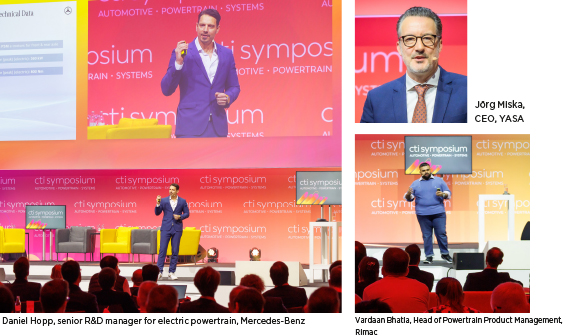
Back in the automotive world, Daniel Hopp, senior R&D manager for electric powertrain at Mercedes-Benz, gave a presentation titled “Insights into the GLC electric drivetrain”. Under the motto ‘Efficiency is the new currency’, he presented the new GLC’s drive system. Adopted from the Vision EQXX concept vehicle, its standout feature is the EDU (Electric Drive Unit) design on both the front and rear axles. The rearmounted PSM primary drive has a two-speed transmission, while the front-mounted PSM secondary drive has a disconnect unit. With ratios of 5:1 and 11:1, the two-speed primary drive offers double benefits: it enables stronger acceleration and shifts the sweet spot to higher vehicle speeds. When cruising, the secondary drive is normally decoupled via a dog clutch, virtually without losses. This allows the primary drive’s second gear, optimized for efficiency, to be used to its maximum advantage. The secondary drive has only a boost function. The GLC has a peak power rating of 360 kW. Maximum charging power is 330 kW, and energy consumption is between 14.9 and 18.9 kWh (WLTC). The company plans to use the drive components in other models too.
Small and Performant Axial Flux Motors
YASA is a spin-off from the University of Oxford that became a Mercedes-Benz subsidiary in 2021. CEO Jörg Miska spoke on “Axial Flux Motors: Superior Performance for EVs and Hybrids”. He began by explaining how axial flux technology works. In conventional radial flux motors (RFM), he said, the magnetic flux runs radially between the rotor and stator; in axial flux motors (AFM), it runs along the rotor’s axis. This design was much flatter and, in the YASA version, offered three times more torque density (20 vs. 7 Nm/kg), twice the power density, and achieved 95% efficiency thanks to a shorter magnetic path. Compared to RFM, AFM requires just one-third as much iron, he said, half as much copper, and a similar amount of magnet material. While the magnet material was more expensive (grain-oriented electric steel), it enabled 5% more power and approximately 9% lower losses in the WLTC. A polymer stator housing further reduced the need for active material. The lower thermal mass made it harder to achieve high peak power, but YASA compensated via measures such as an oil-cooled copper winding and a real-time thermal model. Miska sees advantages for YASA’s Axial Flux Motors in space-constrained applications such as P2 hybrids or twinmotor P4 hybrids for AWD solutions with precise torque vectoring. They could also benefit BEVs, for example, in wheel hub motors. The nextgeneration YASA motors are projected to deliver 750 kW of peak power and will weigh just 12.7 kg.
Rimac Expands Its Powertrain Portfolio
Founded in Croatia in 2009, Rimac first became known for hypercars, most recently in collaboration with Bugatti. In his presentation, “Accessible Performance: How Rimac is Scaling High-Performance E-axles for Next Generation of EVs”, Vardaan Bhatia, Head of Powertrain Product Management, showed how, via its Rimac Technology division, the company is now also positioning itself as a developer and Tier 1 supplier of battery systems, vehicle controls, and e-axles. The current portfolio consists of single- and dual-inverters, two types of electric motors and transmissions each, dual-motor drives, and the Sinteg drive for plug-in hybrids, available in two variants. The goal is a configurable, scalable, high-performance drive that offers best-in-class power and torque density. Rimac is also focusing on an ‘X-in-1 Inverter’, meaning an inverter with proprietary software that integrates all functions onto a single board. As an example, Bhatia showcased Rimac’s current SC1 e-drive platform. This has a power density of 8 kW/kg and a torque density of 90 Nm/kg. It costs less than €8/kW and has an annual production of <10,000 units. In the next step, Rimac aims to get costs below €7/kW and production up to 25,000 units. For the following generation, the targets are 10 kW/kg, 100 Nm/kg, costs of under €5/kW, and production volumes of up to 50,000 units. As of 2027, Rimac plans to transcend the hypercar segment and also equip cars, off-roaders, and commercial vehicles, as well as ‘new mobility segments’.
AI in Cars is Gaining Momentum
Brain on Wheels
The third major topic at the 28th CTI Symposium was artificial intelligence, which is increasingly featured in cars and in development and business processes.
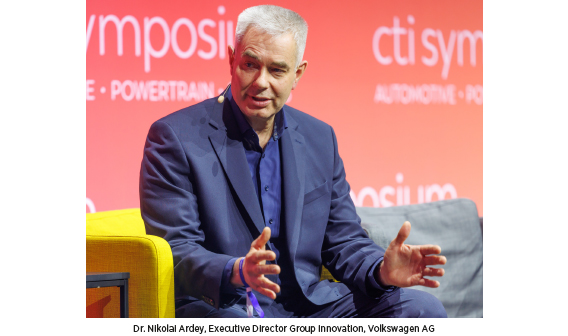
Dr. Nikolai Ardey, Executive Director Group Innovation at Volkswagen AG, titled his presentation “Smartphone on Wheels? Robot on Wheels? BRAIN ON WHEELS! … to Come From an AI Driven Enterprise”. He began by listing the levels of AI hierarchy. From bottom to top, these are Machine Learning, Deep Learning, Generative AI, and Agentic AI. AI Agents acted autonomously and with a clear objective. While many people today associate Gen AI with Large Language Models (LLMs), Ardey spoke of a ‘multimodal AI’ that can process any combination of text, images, videos, music, etc., to create a multi-agent system rather than a single agent. He said AI would change virtually everything in cars, “except for the fundamental laws of physics”. Today’s ‘traditional AI models’ were largely perception-oriented. Increasingly, prediction and planning would be added to the mix. A further step would be to implement end-to-end training for all AI modules – a process handled entirely by AI from start to finish. In autonomous driving, more and more information would be drawn from LLMs, VLAs (Vision-Language-Action), and WMs (World Models) – essentially creating a miniaturized world within the AI. The result would be a ‘Large Model Incorporated’. As an example, Ardey described a situation in which a vehicle must react to a complex, dangerous situation. Today, a system can recognize the scenario, but only humans can make meaningful decisions. Ardey used the analogy of various interconnected ‘human brain agents’. Another development within the car itself is the ‘Personal Butler’, which already exists in part. In R&D, AI would help to mitigate pain points along the AI model. The speaker cited automated ticketing systems and visual AI agents for function testing as examples. In production, AI could streamline the coordination of multi-robot systems. In sales, it could optimize both benchmarking and pricing. Looking ahead, the entire value chain could benefit from a ‘Large Industry Model.’
With a dedicated session on “Artificial Intelligence in Powertrains”, AI played a role in the Deep Dive Sessions in Berlin as well. For the first time, there were also two full-day pre-workshops on the day before the symposium, both of which were in great demand. The first workshop was entitled „AI Fundamentals & Best Practices in Powertrain and Development”, while the second examined a very different issue: „Mobility meets Defence“ – a topic the auto industry is now actively exploring.
Resilience Needs Innovation and Diversity
All these topics – innovations in electrified powertrains, range extenders, and AI – have one thing in common: Innovation is progressing rapidly. Electric drives still have significant potential for development, at both the component and system levels. REEVs are sometimes accused of clinging to the past, but they can help power decarbonization alongside purely electric powertrains. They can also help combustion engines to become more efficient. It’s becoming increasingly clear that a degree of diversity in the way we use resources can strengthen our economic resilience.
Industry insiders agree that automotive development calls for a holistic systems approach in which components are part of an ‘intelligent’ system. The dizzying growth of AI is accelerating this development further still. The boundaries between vehicles, their utility value as living spaces, and their integration into the environment will become even more blurred. In the field of generative AI, some observers are wondering whether a bubble might be forming. Others say it’s just the usual cycle of hype, downturn, then ongoing development. Either way, it seems plausible that AI, in cars and throughout their whole life cycle, is more than just hype. In fact, it is probably essential for enabling technologies such as automated driving to break through.
The next CTI Symposium takes place on May 19 and 20 in Novi, Michigan. While the focus topics will be similar, ICEs and hybrids may be even more important in the US than they are in Europe. For the first time, chassis and electrified powertrain integration will feature in the symposium program. This reflects the way electric drives are increasingly serving as motion-control systems for their vehicles. Whether you’re planning to speak, attend, or exhibit, we look forward to seeing you in Novi!
Date: 17 September 2026 | Time: 1pm – 2pm CET Vehicle Motion Control (VMC) is rapidly moving from a chassis specialist topic to a decisive discipline for electrified drivetrains. With software-defined vehicle architectures and centralised computing on the rise, traction, stability and energy recuperation can no longer be optimised in separate silos. Instead, propulsion and […]
Vehicle Motion Control (VMC) is rapidly moving from a chassis specialist topic to a decisive discipline for electrified drivetrains. With software-defined vehicle architectures and centralised computing on the rise, traction, stability and energy recuperation can no longer be optimised in separate silos. Instead, propulsion and braking must be designed as one coordinated envelope—spanning software, electronics, sensors, computing hardware and actuators – with robust interfaces to steering and suspension.
Who should attend
This webinar is designed for professionals working in:
Vehicle dynamics and chassis systems
Electrified powertrain development
Brake systems and brake-by-wire
E/E architecture and software-defined vehicles
Controls engineering and systems engineering
Advanced development at OEMs, Tier 1s and technology suppliers
Learning Points
In this webinar, we unpack why electrification makes interdependence unavoidable: regenerative braking, brake blending and wheel-slip control require precise coordination between the e-machine and friction brakes (especially with brake-by-wire). What used to be “downstream” calibration becomes an early cross-domain design challenge – balancing efficiency, safety and compliance as regulations tighten and new methodologies (including AI-supported virtual development) reshape how complexity is managed.
You’ll also learn how electrified Powertrain Motion Control (ePMC) is emerging as an integral part of VMC, giving teams a shared language for the intersection where propulsion, braking and energy flows become one coherent control task – critical for performance, range and development speed.
Théophile Allard, CTO and co-founder at Neural Concept The automotive industry is undergoing a structural shift. Development cycles compress from years to months, regulatory requirements multiply and customer expectations rise. The automotive industry’s structural challenges feel more burning than ever: deliver better vehicles, faster, without sacrificing quality or cost.
Théophile Allard, CTO and co-founder at Neural Concept
The automotive industry is undergoing a structural shift. Development cycles compress from years to months, regulatory requirements multiply and customer expectations rise. The automotive industry’s structural challenges feel more burning than ever: deliver better vehicles, faster, without sacrificing quality or cost.
For decades, the answer was adding more tools and specialists. But engineering organisations are fragmented, iteration loops are long, and system-level insights arrive too late. In perspective, AI looks like the perfect solution that will magically absorb workloads and shrink timelines. In reality, despite heavy investment, most initiatives stall at the pilot stage.
The issue is workflow fit, not AI capability. What is needed is a different engineering playbook, one built around how AI-native development actually works.
The fragmentation problem
Modern vehicle development involves hundreds of specialists across aerodynamics, thermal management, crashworthiness, NVH, and manufacturing, each operating with separate tools and timelines.
This workflow is deeply sequential: designers create geometry, analysts spend weeks on simulations, results return, changes are requested, the loop repeats. By the time conflicts surface, design freedom has evaporated. Today, AI can generate and evaluate thousands of design variants per day across multiple physics domains. The constraint is the old workflow, not ready to leverage these new technology capabilities.
From iteration to exploration
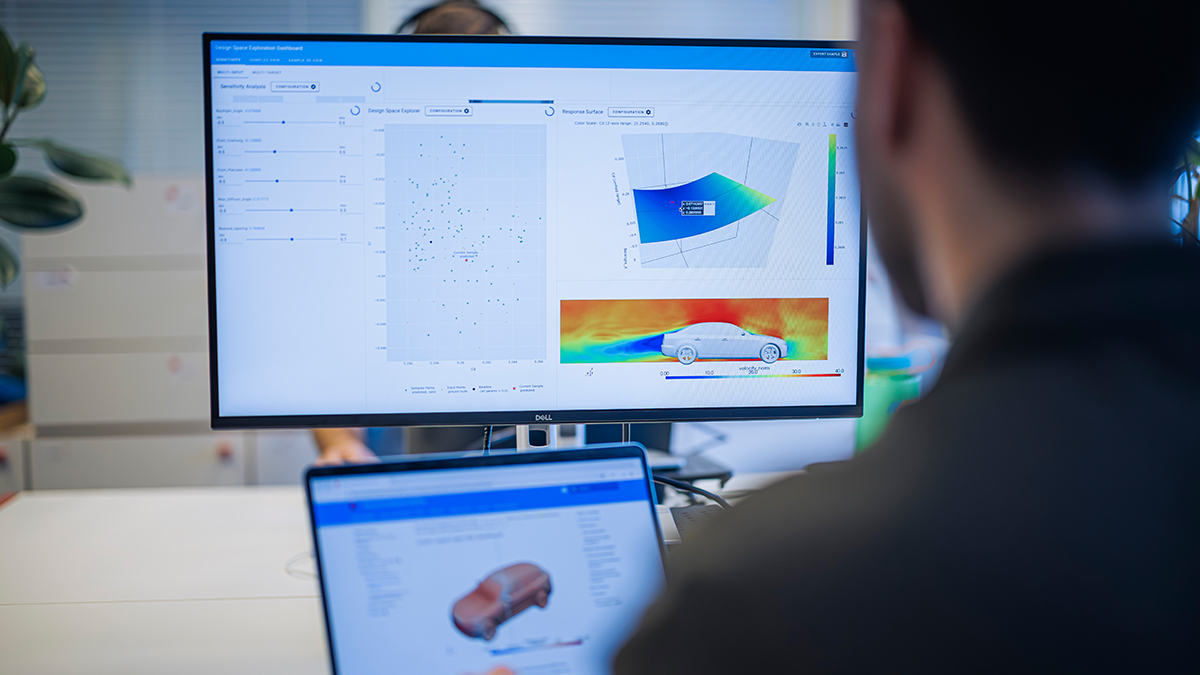
The shift happens when teams move from design iteration to design space exploration. Traditionally, engineers work on one design at a time, modifying CAD, running simulations, and interpreting results.
In AI-native workflows, engineers define a design space with rules, constraints, and performance targets. AI populates that space with thousands of variants. Engineers navigate possibilities, select promising designs, and refine constraints. This fundamentally changes how engineering knowledge is captured, shared and applied.
The intelligence layer
For this to scale, AI must embed in tools that engineers already use, not exist in isolated environments. In practice, AI functions as an intelligence layer connecting to CAD, CAE, and PLM systems through APIs. Engineers work in familiar interfaces but gain AI-powered features: automated geometry generation, real-time performance feedback and cross-discipline constraint propagation.
AI-based surrogate models trained on historical simulation data predict aerodynamic drag, thermal performance, or structural behavior with near-CFD/FEA accuracy at a fraction of computational cost. Engineers see design changes consequences in real time, early exploration happens where iteration is cheap and fast, and promising candidates get validated with high-fidelity tools only when needed.
At scale, this approach collapses development timelines, reduces late-stage redesigns, and shifts critical decisions to phases where design freedom remains high.
The path forward
For organizations ready to make this shift, the first step is identifying workflows where fragmentation causes the most friction and faster exploration would deliver clear value. Aerodynamics and thermal management are common entry points: physics are well understood, simulation data is abundant, and geometry changes have measurable impact.
But success requires more than deploying technology. Engineers need training, infrastructure must support AI workloads at scale, and organizations must accept that this transition will not happen overnight. Those who get it right will make designers more productive, decisions more informed, and better products.