The automotive industry is undergoing a major transformation. Electrification, stricter emission regulations and increasing demands for efficiency are driving innovation across the vehicle. While exhaust emissions have declined significantly, attention is increasingly shifting toward non-exhaust emissions, including brake particle emissions.
Challenges for Modern Brake Systems
Modern brake technology must satisfy multiple requirements simultaneously. Systems need to provide high braking performance, reliable operation under varying environmental conditions, low noise and vibration levels and reduced emissions. In addition, they must integrate seamlessly into increasingly electrified vehicle architectures while supporting high efficiency and durability.
The Zero Emission Brake Concept
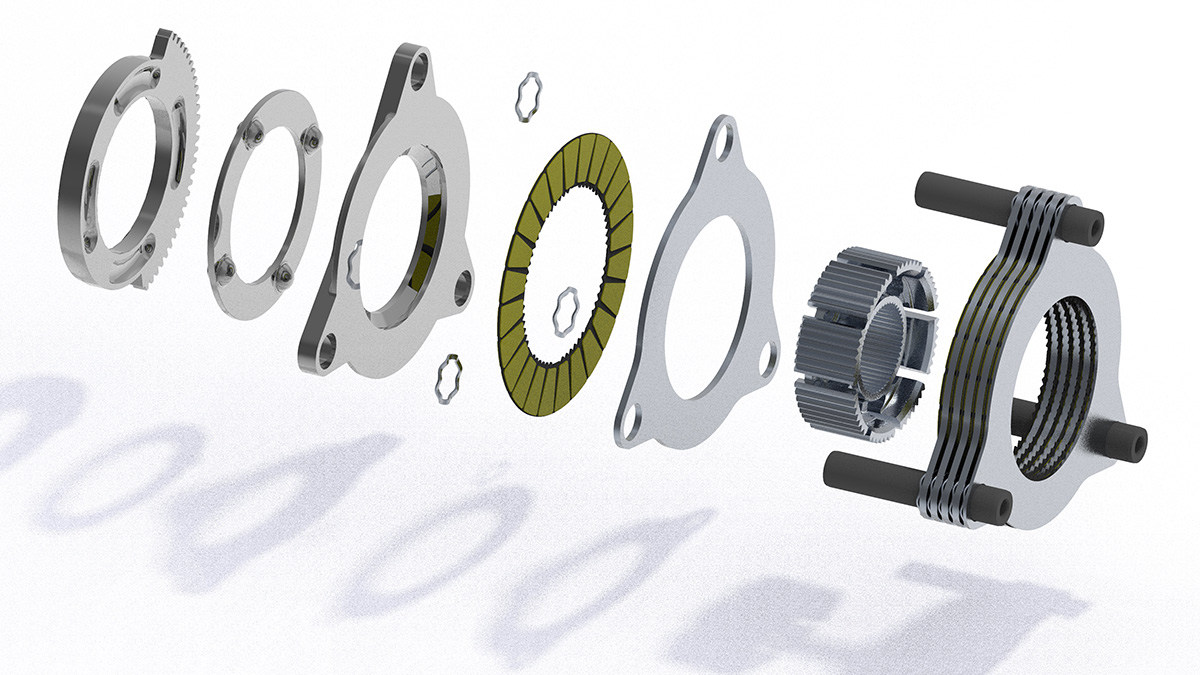
One promising approach is the wet multi-disc brake integrated directly into the electric drivetrain. The Miba Zero Emission Brake combines braking function, actuation, and thermal management within a closed and encapsulated system. An electromechanical actuator transfers braking torque to a multi-disc package via a ball-ramp mechanism, enabling fast and precise brake engagement.
A key advantage of this design is its integration into the existing drivetrain cooling circuit. By utilizing the electric motor’s oil cooling system, no separate brake cooling infrastructure is required. The encapsulated design also protects the brake from environmental influences, preventing corrosion and minimizing maintenance requirements.
Efficiency and Performance Benefits
Reducing energy losses is essential for modern electric vehicles. Thanks to its low drag torque and optimized system design, the Zero Emission Brake can contribute to improved vehicle efficiency. Potential energy savings of approximately 2%, equivalent to around 0.3 kWh per 100 kilometers, have been reported.
The wet-running design also enables high power density. Continuous oil cooling supports stable thermal behavior during repeated high-load braking events, helping maintain consistent braking performance even under demanding operating conditions.
Reduced Wear and Enhanced Durability
Wear reduction is a critical factor for sustainable braking systems. The wet multi-disc concept provides a stable friction coefficient and smooth braking behavior while significantly reducing component wear. Total wear can remain below 1.5 mm over the entire service life of the brake, enabling a maintenance-free fit-for-life concept.
The enclosed design also prevents corrosion, a growing challenge in electrified vehicles where conventional brakes are used less frequently due to regenerative braking.
Scalability for Future Vehicle Platforms
The modular design of wet multi-disc brakes enables scalability through the adjustment of friction disc configurations and the use of shared components. This flexibility supports integration into different vehicle platforms while helping to reduce overall system complexity.
Combined Expertise Across the Entire Brake System Value Chain
Successfully developing future brake technologies require expertise across the entire system value chain. The partnership between Miba Friction Group and Miba Sinter Group brings together complementary competencies in friction materials, tribology, powder metallurgy, actuator technology and industrialized manufacturing. This unique combination allows development challenges to be addressed at both material and system level simultaneously. By combining deep application knowledge with advanced component expertise, innovative braking concepts can be optimized not only for braking performance, but also for efficiency, durability, manufacturability and integration into modern electrified drivetrains.
Conclusion
As electrification continues to reshape the automotive industry, braking systems must evolve beyond their traditional role. In addition to safety and performance, future solutions must address efficiency, durability, and particulate emissions. By reducing wear, eliminating brake particle emissions from the environment, improving efficiency, and supporting long-term reliability, the Zero Emission Brake represents an innovative approach to next-generation braking technology.
Contact
Miba Group
Dr.-Mitterbauer-Str 3
4663 Laakirchen
Markus Schauer: markus.schauer2@miba.com Andreas Promberger: andreas.promberger@miba.com