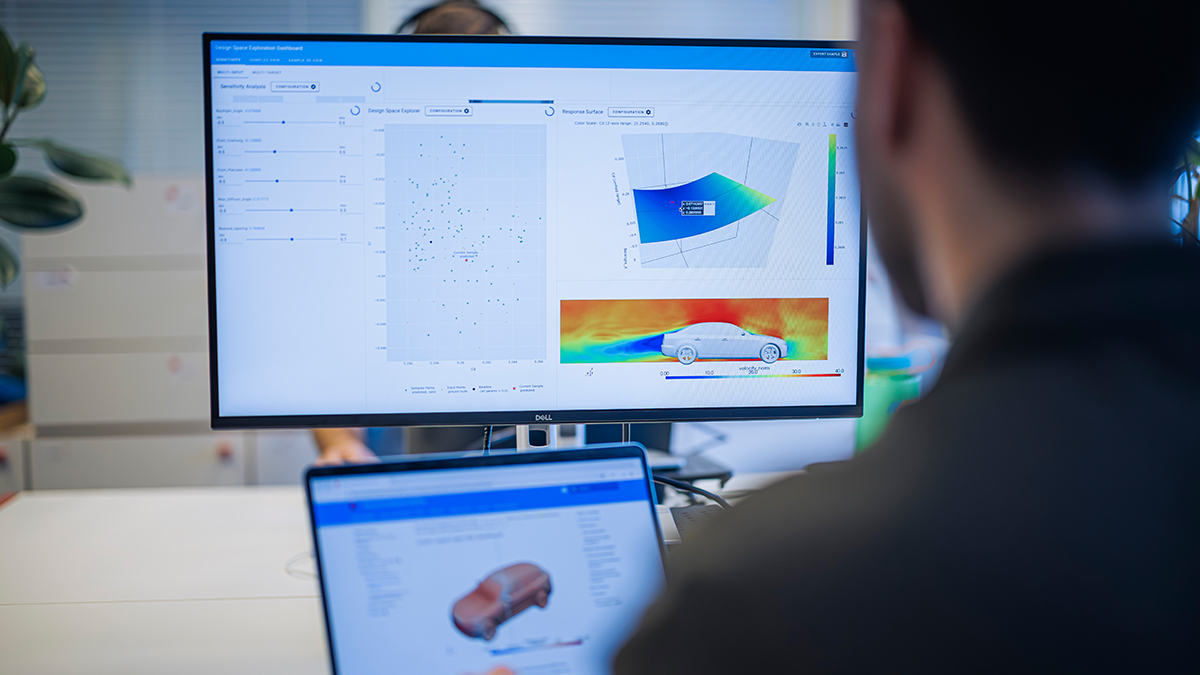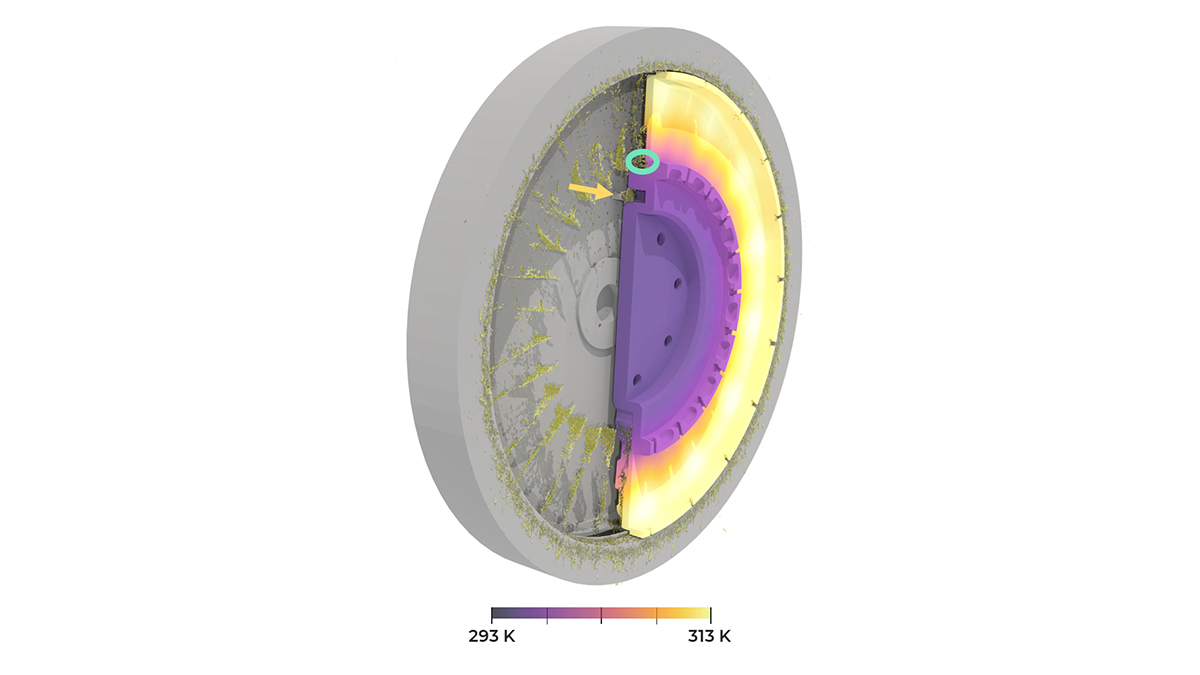



Automotive drivetrain engineers aim to perfect and refine electric drive lines to the point where they operate right at the edge of what is physically possible. This requires simulation models, to act as cost function in the design process or to train reduced order models. These latter models should incorporate all physical loss and performance…
Continue readingRead news from
News: CTI Symposium Germany
How deeptech is already revolutionising EV powertrain engineering
Simon Shepherd, Head of eDrive and Chief Product Officer, Monumo Deeptech is transforming EV powertrain engineering by introducing new levels of computational freedom, speed, and system integration, allowing companies to achieve levels of performance and cost reduction previously out of reach through existing methods.
Continue readingAI-Powered Engineering Software for Electric Drives: OPED
Boosting powertrain development with agility, fast time-to-market and optimal product-market fit Dr. Martin Hofstetter, Head of E-Mobility and Alternative Drivetrains Research Group, Graz University of Technology Dr. Dominik Lechleitner, Senior Researcher, Graz University of Technology Designing electric powertrains is challenging: engineers must quickly find competitive designs and optimize the system for multiple key performance indicators…
Continue readingFrom Lab to Exhaust: A Startup’s Breakthrough in CO2 Transformation
Alicja Stankiewicz, CTO, Coat-It Marek Turkiewicz, CEO, Coat-It Pollution kills more people globally each year than war, hunger, or disease. And at the heart of this crisis is carbon dioxide (CO2) – the primary greenhouse gas driving climate change.But what if CO2 could be split and transformed before it ever leaves a tailpipe?
Continue readingBest-in-class Thermal Assessment of Electric Powertrain
Mario Theissl, CEO, Theissl Systems GmbH THEISSL systems enables precise measurement of temperature and torque in electric drive units with its minimally invasive sensor telemetry technology that is tailored specifically to each customer application. These systems can be seamlessly integrated into existing drive components with minimal need for system modifications, allowing for highly accurate measurements…
Continue readingA New Material Solution for Low Wear, Low Friction, and Electrical Insulation in Automotive Transmissions
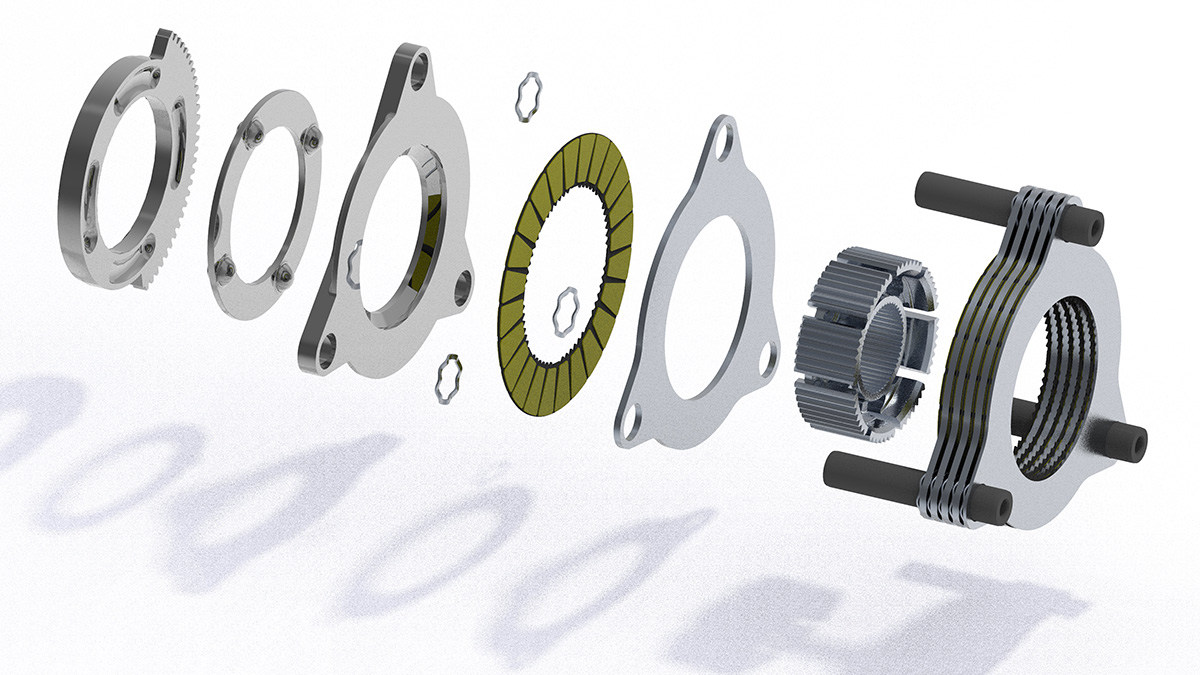
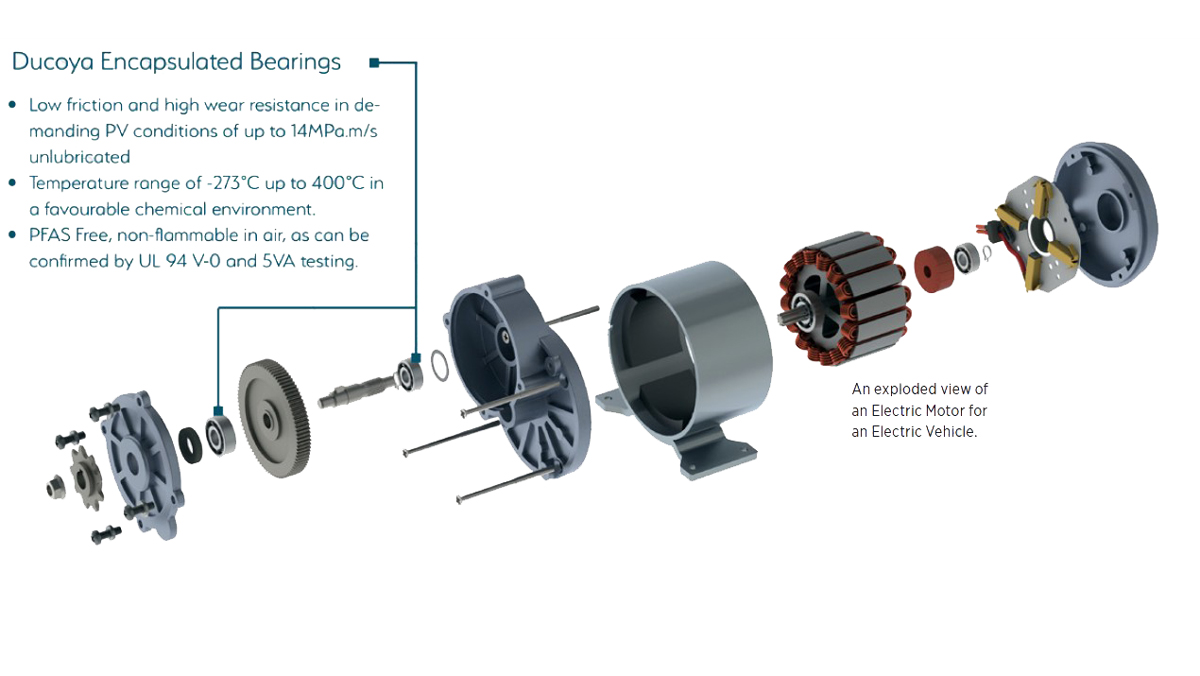
Geoff Lewis, Technical Director, Duvelco What is a New Material? Being ‘new’ is claimed with some regularity in the world of polymers; however, step changes in performance are less frequent. Here, I am going to look at an innovation that may pass the test and rightfully be called a new material. The polymer in question…
Continue readingProposal of Next-generation HEV System
Kazuyoshi Hiraiwa, President, FINEMECH Shinji Morihiro, Representative, M Powerlabo Background of the proposal In recent years, the problem of BEV has become apparent, and the value of HEVs has been reevaluated. Under these circumstances, we would like to propose a next-generation HEV system. Purpose of the proposal This proposal is based on the THS (Toyota…
Continue readingBoosted Sustainable Electrically Excited Synchronous Motors
Dr-Ing. Philippe Farah, CEO – Founder YEESMA SARL Dr-Ing. Shafigh Nategh, CTO – Founder, YEESMA SARL Yu-Chi Tsai, Business Development & Marketing, YEESMA SARL Electrically Excited Synchronous Machines (EESM) is one of the strong candidates to solve the supply chain risks, costs and sustainability issues due to the Rare-Earth magnets presently used in almost 90…
Continue readingUK testbed for sustainable gear manufacturing: scaling to Indian volume production
Dr Agnes Ragondet, Group Sustainability Director, Hewland/Hero Motors. This paper presents a sustainability-driven manufacturing initiative that leverages a UK-based pilot facility to develop, test, and optimise sustainable technologies in gear manufacturing with the objective to enable scalable implementation in Indian high-volume production facilities.
Continue readingSmart Chassis Meets Smart Powertrains
A Practical Guide to Integrated Motion Control in 2026 and Beyond This whitepaper explains why chassis–powertrain integration is no longer optional, but a strategic imperative for OEMs and Tier 1s. It focuses on concrete use cases – torque vectoring with brake-by-wire, steer-by-wire with active suspension, and centralized vehicle motion control – and discusses the engineering…
Continue reading