Alicja Stankiewicz, CTO, Coat-It
Marek Turkiewicz, CEO, Coat-It
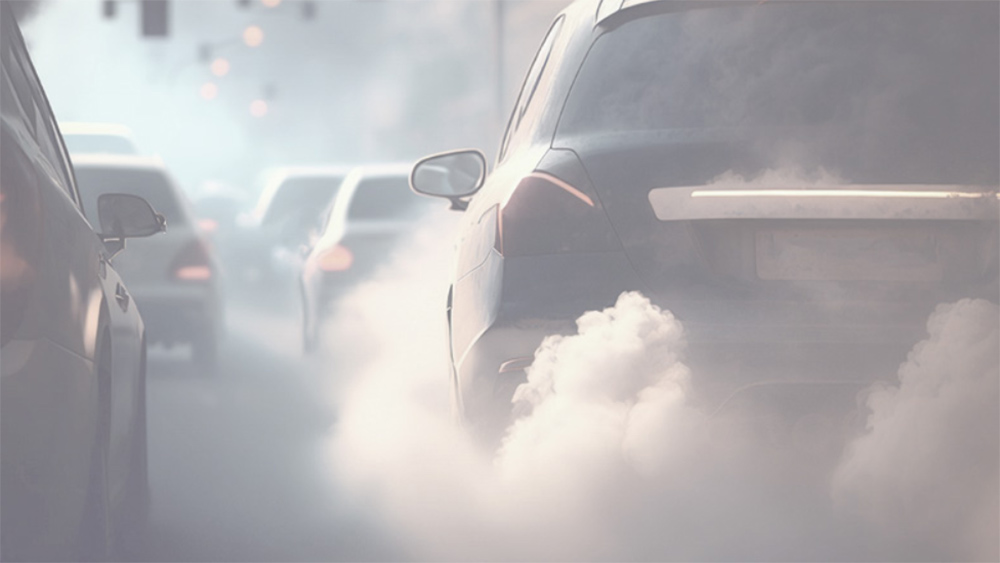
Pollution kills more people globally each year than war, hunger, or disease. And at the heart of this crisis is carbon dioxide (CO2) – the primary greenhouse gas driving climate change.But what if CO2 could be split and transformed before it ever leaves a tailpipe?
That’s the vision behind RainIons, a U.S.-based startup that has developed a revolutionary powder capable of reducing greenhouse gas emissions – including CO₂, NOx, and hydrocarbons – by transforming them into safe, stable molecules. The application of technology is currently being developed further by COAT-IT, a Polish startup specializing in the engineering of high-temperature-resistant coatings tailored for practical automotive applications.
The Science Behind the Solution
The innovation combines pyroelectric and piezoelectric minerals with naturally occurring radioactive materials (NORM) in a conductive matrix. This unique blend emits alpha particles, negative ions, and electrons – without external power. These particles ionize pollutants and split strong molecular bonds, including those in CO₂.
Independent studies and internal evaluations suggest the solution can significantly reduce CO₂ emissions across a variety of conditions. At elevated temperatures (around 500 °C), reductions have been observed above of 50 %. Even in lower temperature environments (70 – 200 °C), meaningful decreases in CO₂ – typically within a 25 – 30 % range – have been noted, with no harmful byproducts identified. In moisture-rich settings, reductions of up to 50 % indicate that water may play a catalytic role in the
transformation process.
From Tourmaline to Transformation
Inspired by earlier research on tourmaline-infused asphalt, the tourmaline-based “negative ion powder” was infused into a conductive coating and applied it to a diesel muffler. FTIR spectroscopy revealed that CO₂ was being split into graphite and oxygen, with water concentration directly influencing reaction efficiency.
What’s Next?
COAT-IT is now developing durable, high-temperature coatings for commercial deployment. The next phase includes real-world trials using diesel engines and custom exhaust systems. The goal: to quantify transformation products and optimize substrate design for maximum pollution reduction.
If successful, this technology could redefine emissions control – turning exhaust systems into active climate solutions.