Mario Theissl, CEO, Theissl Systems GmbH
THEISSL systems enables precise measurement of temperature and torque in electric drive units with its minimally invasive sensor telemetry technology that is tailored specifically to each customer application. These systems can be seamlessly integrated into existing drive components with minimal need for system modifications, allowing for highly accurate measurements under real-world test bench and vehicle conditions.
With project-specific telemetry units for E-machine rotors gearbox shafts and clutches, the original characteristics of the DUT are inherently preserved while making optimal use of the available installation space. All systems are entirely contactless, transmitting wirelessly to the evaluation unit to ensure reliable performance on high-speed rotating components.
At the core of thermal EDU characterization is the choice of the right sensor elements. Therefore, as a full-service partner, THEISSL systems supports the entire measurement process starting from the definition of test points and the selection of suitable sensors all the way to data analysis after a successful test run.
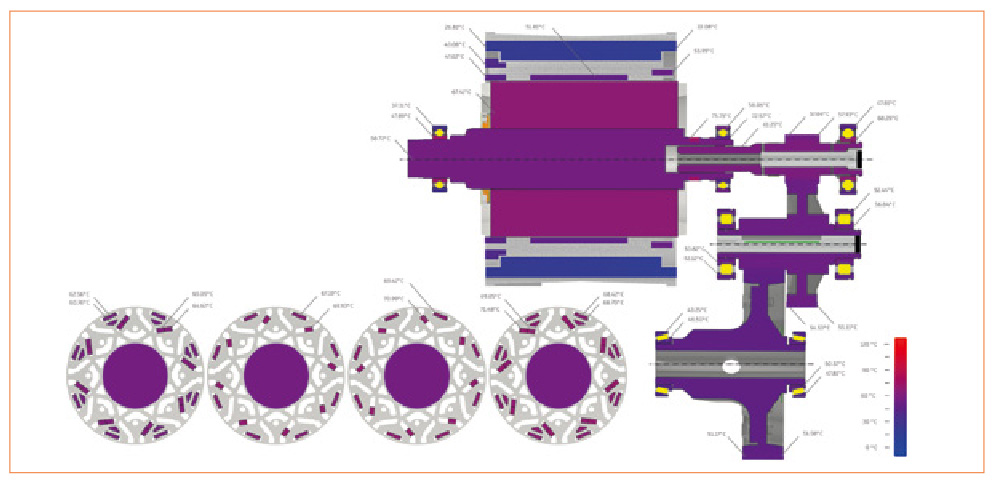
Even in demanding applications, such as rotor temperature measurements in electric drives, up to 32 thermocouples can be used to gain vast knowledge of the thermal behavior of the DUT. Another variant of our telemetry boards is just 10.5 mm wide, foldable, and bendable around tight radii, which enables temperature measurements on gear teeth and bearing inner rings on transmission shafts. Furthermore, it could be mounted on the rotor shaft, for gearbox input torque measurement e.g. to determine system efficiency.
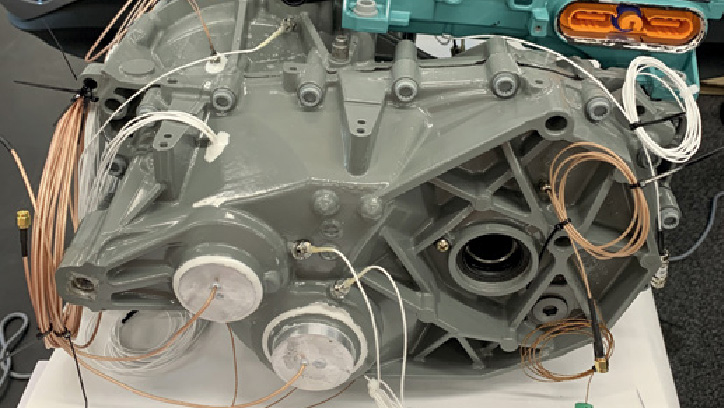
This measurement technology was implemented in a VW ID.3 demonstrator vehicle, which is showcased at CTI 2025 in Berlin. The system captures inner and outer bearing ring temperatures, gear tooth temperatures, as well as torques at the gearbox input shaft and side shafts. In the E-drive rotor temperature measurement, a telemetry system capturing 16 individual test points was complemented by four additional sensors on the stator windings, giving unprecedented insights into the thermal behavior of the
vehicle’s drive train.
This data, collected over more than 10,000 km of test drives then formed the basis for the training of a Thermal Neural Network (TTN) modelling the thermal behavior of the E-machine. Due to the large number of temperature measurement points, the temperature estimator for the rotor magnets achieved a highly respectable accuracy of ±1.5 K.
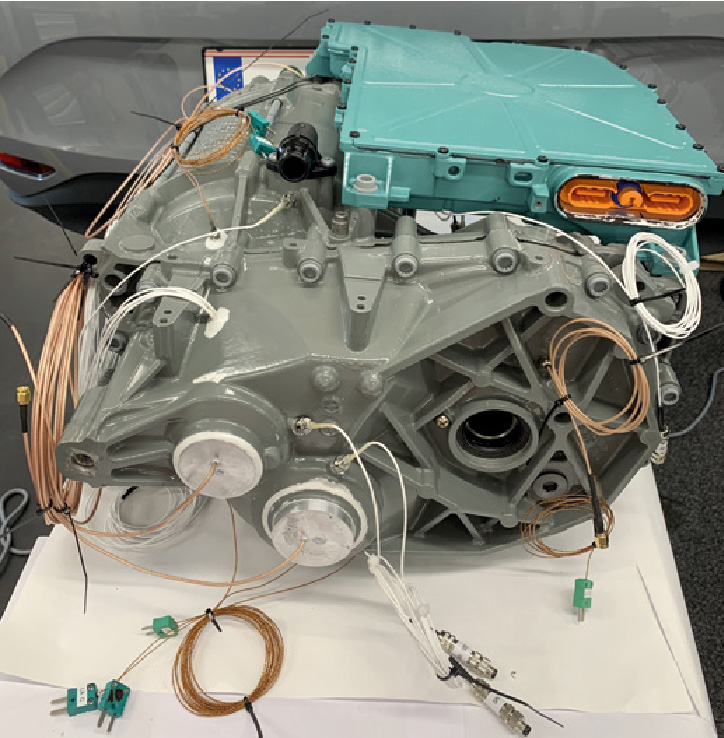
Application example: Thermal testing of the electric drive unit of the VW ID.3