Dr Agnes Ragondet, Group Sustainability Director, Hewland/Hero Motors.
This paper presents a sustainability-driven manufacturing initiative that leverages a UK-based pilot facility to develop, test, and optimise sustainable technologies in gear manufacturing with the objective to enable scalable implementation in Indian high-volume production facilities.
UK gear manufacturing market benefits from a strong industrial heritage and highly skilled workforce [1]. A focus on high quality products and high end applications are key drivers of the UK sector [2].
The UK gear manufacturing market is part of a broader £1.3bn bearing and gear manufacturing industry. The precision gearbox market itself generated $30.3 million in 2023 and is projected to grow at 3.4 % CAGR through 2030 [3].
However, high operational costs, wastes, labour expenses and pressure from raw material price inflation limits the overall advantages of UK manufacturing [4, 5, 6].
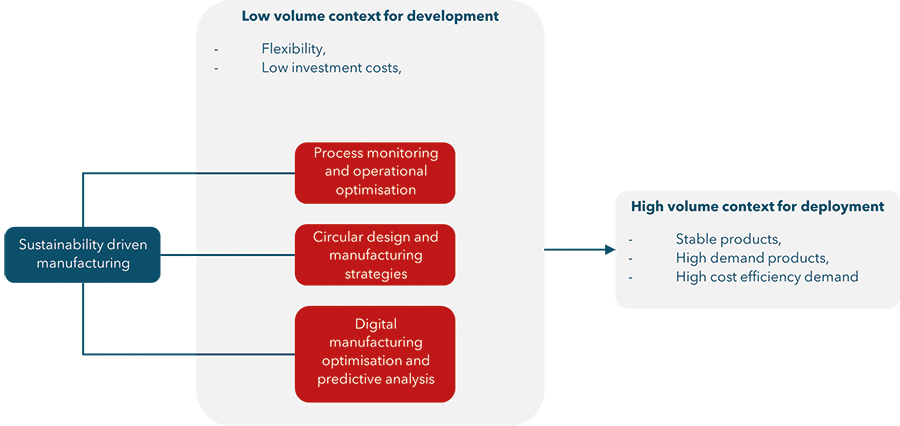
Figure 1. The drivers of sustainable manufacturing
In addition, the nature of low volume and custom-designed market leads to higher operational costs, highlighting the demand for greater efficiency and optimisation in both design & manufacturing processes.
The global gear manufacturing market is projected to increase by USD 137.8 billion at 8.1 % CAGR over the 2024 – 2029 period [7]. The market growth is fuelled notably by industrial expansion and increasing demand for high-Performance transmission solutions across various sectors [8].
In India, price competitiveness is a major challenge for gear manufacturing, due to strong competition from low-cost producers abroad. Balancing competitive pricing with quality and profitability in highvolume production remains an ongoing challenge [9].
This paper demonstrates how a sustainability-driven approach to gear manufacturing can address these challenges and enhance efficiency using IoT and smart manufacturing technologies.
The initiative illustrates how implementing these practices within a controlled, low-volume manufacturing environment in the UK can facilitate the technology transfer to high-volume gear manufacturing industry in India.
Process monitoring and operational optimisation
Gear manufacturing is an energy-intensive process that generates significant amount of bi-product material waste.
On average at Hewland, a low volume manufacturing organisation, energy costs associated with gear and transmission production can account for up to 65 % of total factory energy costs, which includes heat treatment capability, while 40 % of the raw materials used in machining operations are lost as waste. In general, manufacturing sector is energy intensive and can consume up to 20 – 25 % of world’s total energy [10].
Additionally, frequent tooling changes, small batch sizes, and customized new designs greatly affect operational efficiency, with up to 35 % of cycle time attributed to indirect production activities such as tooling setup, programming adjustments, and part inspections.
Finally, historical operational standards can lead to a significant increase in downtime, accounting for up to 50 % of an asset’s total energy usage.
All these factors together contribute to a significant increase in the product’s carbon footprint. Figure 1 shows the drivers of sustainable manufacturing study.
Firstly, the case study involved integrating IoT and smart factory tools into each individual manufacturing asset to monitor and analyse productivity and efficiency through energy data combined with manufacturing operation management data.
It involved a physical energy monitoring and data collection device paired with a custom-developed intelligent tool for data processing and analysis.
The combined analysis of energy consumption data and manufacturing operations management software offered valuable insights into operational efficiency, revealing opportunities for both energy savings and performance improvement.
First key outcomes included:
- 20 % average asset downtime reduction
- 260,000 kWh reduction (16 % of annual consumption)
- 52tCO2e reduction
- Greater process standardisation
- Optimised operational cost prediction
The in-house developed smart factory tool delivered precise data on the status of each manufacturing operation, enabling its use as a powerful digital twin to correlate asset and operational costs, and facilitating easy transfer to high-volume manufacturing cost predictions.
Circular manufacturing strategies
The next phase of the study focused on exploring circularity opportunities in manufacturing. Given the large volume of swarf waste generated during operations, it was crucial to identify ways to minimize waste while creating opportunities for material reuse.
The case study focused on components requiring a central hole to be machined in the steel bar. Two turning operation methods were assessed:
- A conventional process where the entire hole was produced by cutting through the material, converting all removed material into swarf.
- A more sustainable process using an optimised tool path that cut around the hole’s perimeter, enabling the recovery of a solid steel piece that could be reused to manufacture another component.
The study revealed that cycle times could be reduced by 60 % to 90 %, depending on the hole size, cutting energy cost per operation by similar proportions, while waste generated per part decreased by up to 60 %.
Such simple but yet effective approach enables substantial material savings, particularly in high volume production. For instance, machining a 400cm3 piece of steel using the perimeter tool path would save 15tons of steel and 29tCO2e in a 5,000-part batch, allowing the recovered material to be reused for producing other components.
Sustainable design optimisation
The final phase of the study focussed on sustainable design opportunities, examining how design choices impact overall manufacturing costs, cycle times, material usage and product carbon footprint.
The component selected was a shaft with a primary wheel, originally manufactured as two separate parts welded together. This two-part design was compared with a redesigned single-part solution.
As shown in Table 1 the single-part design solution achieved a 51 % reduction in energy consumption, in-house cycle time and CO2e emissions, while material wastage during production decreased by 11 %.
Note: the overall cycle time and cost of the two-part solution was greatly increased due to an additional welding operation that also sub-contracted.
The single-part design solution needed revision to account for a greater gap between the gears to allow for grinding operation. Although this process would not be necessary for motorsport application, it is essential for EV application in order to reach NVH requirements. High volume machining operations such as power skiving and gear honing are also considered to reduce the gap to a minimum while the choice of gear type, spur vs helical, can also impact the required distance between the gears.
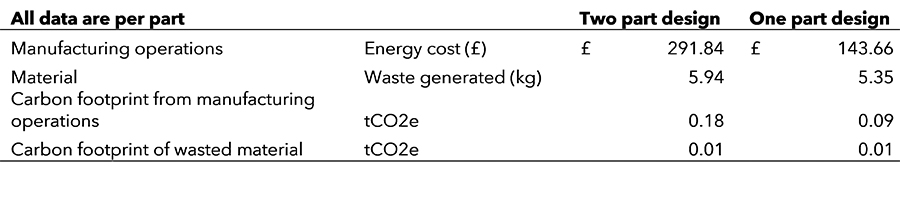
Table 1. Comparison of energy cost, material wastage and carbon footprint between 1 part and 2 part design solutions
Overall, this case study demonstrates various opportunities for a more efficient and sustainable gear manufacturing approach that can be easily transferred from low volume to high volume manufacturing context as summarised in Figure 2. While low volume context allows for quick and flexible development, the high volume implementation allows for greater savings and optimisation benefits.
Manufacturing and design decisions can be influenced by a sustainability approach to be more energy efficient, more cost effective and generating a lower carbon footprint of the product.
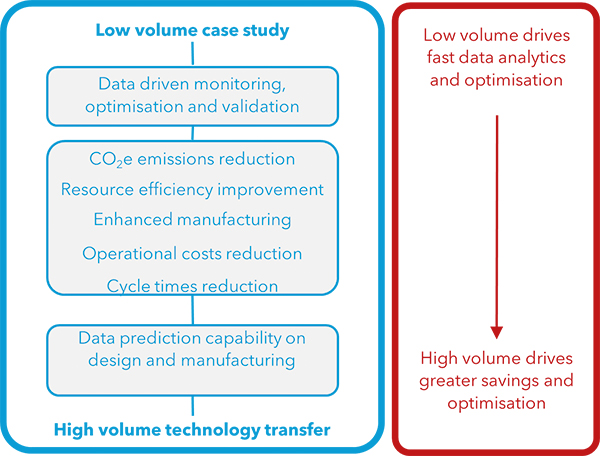
Figure 2. Process and benefits of low volume case study to high volume technology transfer
References
[1] The cost-benefit of manufacturing in the UK
[2] UK automotive manufacturing: facing up to the challenges of the future
[3] UK Precision Gearbox Market Size & Outlook, 2030
[4] https://www.manufacturingmanagement.co.uk/content/news/uk-manufacturing-challenges-make-uk-survey-findings
[5] https://www.cbi.org.uk/media-centre/articles/uk-manufacturing-struggles-to-regain-momentum-as-cost-pressures-mountand-orders-remain-weak-cbi-industrial-trends-survey-july-2025
[6] https://www.expressandstar.com/news/business/business-picks/2023/09/19/supply-raw-materials-and-import-costs-top-ukmanufacturing-concerns
[7] https://www.technavio.com/report/gear-manufacturing-market-industry-analysis#:~:text=Gear%20Manufacturing%20Market%20Size%202025,in%20this%20evolving%20market%20landscape.
[8] https://www.prnewswire.co.uk/news-releases/industrial-gearbox-market-to-reach-usd-37-1-billion-by-2029–key-trends-growth-drivers—valuates-reports-302394728.html#:~:text=Major%20Factors%20Driving%20the%20Growth,strong%20emphasis%20on%20energy%20efficiency.
[9] https://www.imarcgroup.com/india-gear-market
[10] https://zipdo.co/sustainability-in-the-manufacturing-industry-statistics/