News

News from cti-symposium.world

Protecting a single profit pillar is not a winning strategy
Global powertrain markets are diverging. BorgWarner CEO Joseph Fadool explains why “making speed the moat”, re-regionalization, and AI will shape the automotive propulsion industry – and why policy shouldn’t push technology
Continue reading
Protecting a single profit pillar is not a winning strategy
Global powertrain markets are diverging. BorgWarner CEO Joseph Fadool explains why “making speed the moat”, re-regionalization, and AI will shape the automotive propulsion industry – and why policy shouldn’t push technology
Joe, what does it mean for BorgWarner when, as is currently the case in global markets, propulsion concepts are diverging dramatically?
Maybe some context is helpful here. In the past, let’s say 30 to 40 years ago, much of the powertrain development was driven by emissions and fuel economy improvements, with Japan and Germany leading in part. Each region followed more or less the same path, adopting technology that led in one region and then flowed to others three to five years later. What’s changed now is that each market requires a fundamentally different mix due to a combination of local regulations and consumer behaviors. In China, over 50% of vehicles are hybrids or pure BEVs; Europe is approaching 18-19% EV share; the U.S. is stepping back, with government incentives withdrawn and EV penetration expected to remain around 7-8%. For BorgWarner, as a global company serving all major OEMs around the world, the good news is that we have a resilient portfolio capable of serving all markets, no matter the propulsion type. As an industry, we must return to a customer-first mentality rather than letting governments legislate what people will buy. I think that was a complete disaster. The OEMs know what consumers want to buy. You’re going to continue to see regionalization and differences between the markets. Long term, however, we still believe in electrification; it is the only way to truly decarbonize. But it will happen at different speeds, it is dependent on many factors like infrastructure and rare earth mineral availability, and it won’t be without disruption.
In your plenary speech at the CTI symposium in Novi, you used the term “moat”. What are the decisive factors in stabilizing or widening it, especially in competition with China?
Moat is a term Warren Buffett and others used – a reference to castle moats that slow down or stop the enemy. For our industry, it means a couple of things. First, innovation: more value at lower cost, more efficient powertrains – better fuel economy for combustion, smaller batteries for the same BEV range. Second, and this is what’s changed in the last five years: speed as a moat. China is teaching the rest of the world that you must constantly reinvent and bring better products to market faster. The companies that move at speed will win; the slower ones are stuck in the old paradigm. We see this reflected in the OEM landscape too: when I joined the industry 35 years ago, growth was driven by Ford, GM, Volkswagen, Toyota. Today, the only OEMs really growing are seven or eight Chinese companies, plus Hyundai. Hyundai is still growing and doing well. Everyone else – GM is out of Europe, Stellantis retreating from India, Ford down to 3% in Europe – is shrinking. Retreating to protect a single profit pillar is not a winning strategy, in my opinion.
How does regionalization align with the traditional concept of economies of scale through a “world product”? And what are the risks of speed over scale?
This is a great question, because for 20 to 25 years, as global vehicle volumes grew from 50 to 90 million, scale was the name of the game. We were investing heavily in technology, developing suppliers, and building factories that needed to run efficiently. What we now see is that beyond a certain point, other factors become more important than scale – specifically speed and local accountability. That doesn’t mean abandoning scale; it means finding a new balance. Housing and mechanical parts, even factory assembly, require far less scale than before because these are readily available products, and suppliers are more regionalized. Semiconductors, on the other hand, remain a scale game – chip companies pay more attention to Tier 1s and OEMs that give them high volume. The downside of scale is loss of local agility. Large global competence centers that push technology out to regions are less effective now – they’re expensive and slow. When a region has to route
decisions back to a distant center of competence, that’s time lost, and people far from the customer are making local market decisions without fully understanding the pressure on the ground. What we find more effective is giving regions greater authority and competence – a democratization of know-how, with regions learning from one another rather than relying on a central hub. BorgWarner has a decentralized operating model for this reason.
Would a concept of “similar but not identical” components across markets work for you as a supplier?
Definitely. Take turbochargers: they spin at 300,000 RPM and can be dangerous if they fail. Engineered for the German market – high speeds, high temperatures, autobahn use – they’re built to be virtually indestructible. In China, the use case is mainly stop-and-go traffic with 1.5-liter engines. The load profile is fundamentally different, so you don’t need the same robustness. We’ve reengineered our turbo line for China accordingly – 20% lower cost than the European or North American equivalents. Five or ten years ago, we would have carried over the European or North American product into China. And we found we were no longer competitive. We were sometimes over-engineering for markets that didn’t need it – and while we told ourselves we were gaining scale, the design simply wasn’t affordable in every market.
How can leadership culture help to handle the change?
Leadership has to start by accepting the uncertainty. A big part of the job is looking around the corner and anticipating the future – that has become much harder. It means thinking in scenarios rather than toward a single point, even while maintaining a true north. The second shift is toward flexibility: a resilient portfolio, a flexible supply chain, and a manufacturing footprint that can serve multiple customers on the same production line rather than running just one. Leading today is about providing clarity on facts and priorities, while helping people navigate the uncertainty. The disruption increasingly comes from outside the industry, and that’s accelerating. In China, many successful automotive players came from consumer electronics – Huawei being the obvious example. In the U.S., Apple, Google, Waymo, and Tesla have demonstrated that companies with no traditional automotive background can become highly relevant because of software competence and systems thinking. These players don’t focus on individual components – they think in terms of the experience they want to deliver to the customer.
BorgWarner has been shaped strongly by powertrain hardware. What does it mean when intelligence is shifting into software – and the SDV?
We’ve seen software grow in the powertrain space for a long time – ECU development, electrification driving demand for complete drive modules with integrated software. The software-defined vehicle is a parallel innovation aimed at reducing development costs and enabling over-the-air updates long after a vehicle has left the dealership. If you think of how a smartphone works, the SDV follows the same logic: new features come through software, not hardware replacement. Electrification and SDV actually accelerate each other. The hardest part of implementing SDV is doing it on a legacy platform with hundreds of distributed electronic modules. The goal is to consolidate to a zonal controller architecture. At BorgWarner, we see a future where the Powertrain controller integrates into the front-end zonal architecture. Some competitors have expanded from their ECU supplier role into zonal suppliers – we’re looking at the same path. Most OEMs currently keep Powertrain as a separate subsystem, but we expect that to change, and we want to drive it.
Where is AI most important for BorgWarner as a company?
We’ve used machine learning and AI in our factories for a long time. Generative AI with large language models adds value in three areas. First, product development: replacing routine engineering tasks with agents and tools – code generation, test automation. The highest benefit
comes from automating the repetitive tasks that consume significant engineering hours, freeing time and resources up to manage more strategic work. Second, factory automation: AMRs and robots are increasingly AI-enabled, and generative AI makes it significantly easier to train them. We expect a step-function increase in automation potential in our factories. Third, personal productivity and end-to-end process improvement: using tools like Copilot or Claude for daily work, and automating manual processes such as monthly financial closes and forecasting. Generative AI is one of the biggest changes we will witness. Personally, I find it liberating – you can delegate the monotonous groundwork, the research, the routine write-ups, and focus on the work that actually creates value.
How will increasingly software-defined vehicles change buyer expectations, particularly in North America, where combustion still dominates?
The two trends are closely linked. SDV is easier to implement on an EV platform. As EV batteries become more affordable, adoption will grow; as EV adoption grows, users will experience more features; that experience will pull more people toward EVs in the future. It’s a reinforcing cycle. We expect SDV to reaccelerate electrification as electric vehicles become cost-competitive. Europe will play this out first; North America will follow. Buyers will demand over-the-air updates, vehicles that have more features and deepen integration with their home and mobile environment. You know, these cars are awesome. So I think these two things are converging, and it will reaccelerate electrification to some degree.
Interview:
Gernot Goppelt
Innovation Powered by High-Fidelity Multiphysics Modeling
A Holistic System Optimization of BorgWarner’s Next Generation Integrated Drive Modules Dr. Arnaud Leblay, System Engineer Technologies & Innovation Eric Bourniche, Engineering Supervisor Technologies & Innovation Dr. Pascal David, Engineering Manager Technologies & Innovation Adrien Bossi, System Engineer Technologies & Innovation Harsha Nanjundaswamy, Engineering Director Technologies & Innovation all BorgWarner PDS
Continue reading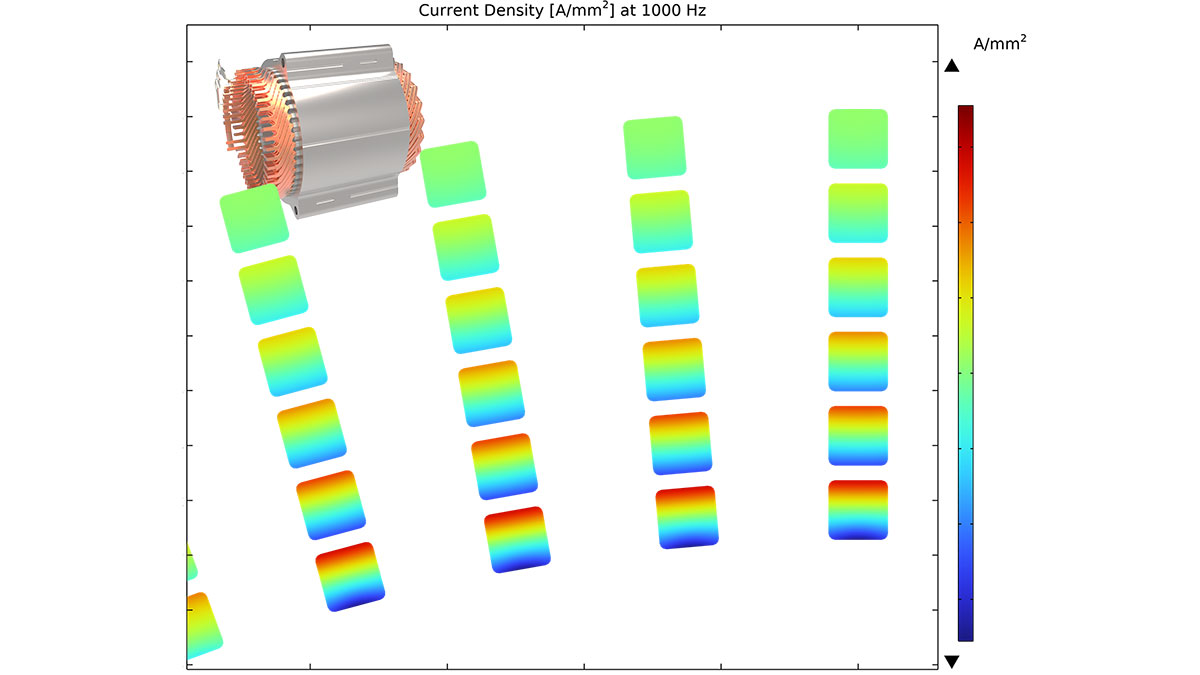
Innovation Powered by High-Fidelity Multiphysics Modeling
A Holistic System Optimization of BorgWarner’s Next Generation Integrated Drive Modules
Dr. Arnaud Leblay, System Engineer Technologies & Innovation
Eric Bourniche, Engineering Supervisor Technologies & Innovation
Dr. Pascal David, Engineering Manager Technologies & Innovation
Adrien Bossi, System Engineer Technologies & Innovation
Harsha Nanjundaswamy, Engineering Director Technologies & Innovation
all BorgWarner PDS
1. Introduction
The development of cost effective, energy efficient and reliable Integrated Drive Modules (iDM) for electric vehicles is closely tied to optimization challenges. Addressing these challenges requires Multiphysics holistic approaches, that span magnetic, electrical, thermal, mechanical and fluid domains. Such an engineering methodology has been adopted by BorgWarner.
Across the industry, numerical methods such as Finite Element Analysis (FEA) and Computational Fluid Dynamics (CFD) are widely used to evaluate systems involving one or more physical phenomena within multiphysics analyses. These Tools form the foundation for higher level modeling approaches such as Digital Twins, which enable full system vehicle simulations and the evaluation of electric machine control strategies under real driving conditions. Combined, these Methods provide critical metrics that support decision making and guide technology development roadmaps.
BorgWarner PowerDrive Systems Technologies & Innovation group has developed a high fidelity, multiphysics based Digital Twin to support the development and innovation of iDM. The model has been rigorously validated through comparison with 78 physical signals sourced from both CAN communication channels and external sensor data [1]. In addition, some numerical models of sub components have been developed and validated in partnership with universities.
2. Methodologies Development for Deeper Insight
Methods form the foundation of engineering organizations. Sustaining innovation requires continuous improvement. Our methodology development strategy is grounded in in-house technical excellence, with experts actively contributing to Centers of Expertise to share best practices, lessons learned and identify improvement opportunities. This internal capability is further reinforced through strategic partnerships with academic institutions, start-ups, and technology providers. Our Analytical Simulation Design plan [1] is formed by simulation Cards whose inputs and outputs are bound to other cards to form a structured simulation framework. It enables pinpointing methodological gaps and areas where model predictions need refinement for greater accuracy and highlights phenomena that require deeper investigation through multiphysics analysis.
Those refinements are based on a dual approach combining advanced multiphysics modeling with high-quality experimental validation. The refinements can focus non-exhaustively on thermal, electric, magnetic, mechanical or fluid dynamics behaviors on overall iDM and its subcomponents.
One of these approaches concerns the methodology refinement applied to electric machine stator loss assessment. Stator loss can be split into iron loss and copper loss. The loss estimation enhancement is performed in collaboration with the Division of Industrial Electrical Engineering and Automation of Lund University in Sweden. The study was carried out in multiple steps to characterize the material properties, model the electromagnetic behavior, and finally perform transient thermal analysis.
The first step of the loss evaluation is to measure the lamination loss named iron loss and magnetic properties as magnetic hysteresis curves also known as BH curves. The experimental description can be found in [2].
The second step involves using the magnetic properties obtained in the first step and incorporating them into 3D Finite Element (FE) model of a complete wound stator under COMSOL Multiphysics, to assess the copper loss. The simulated impedances are compared to impedances measurements, and the relative error is not higher than 5% over a range of 100 Hz to 10 kHz.
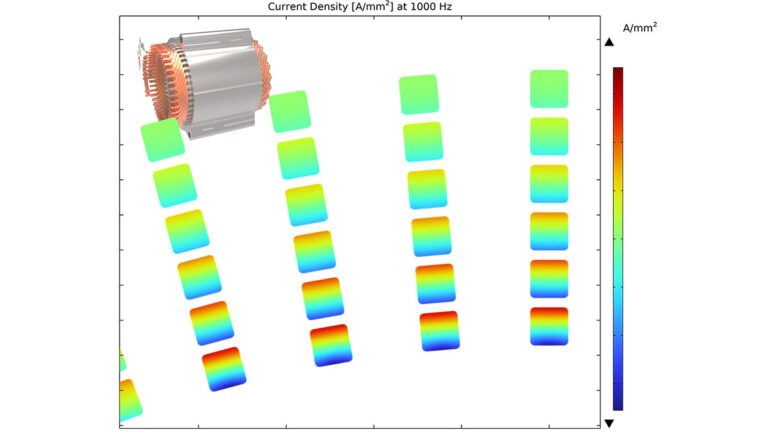
The resulting current density with the conductor cross section can be observed on Fig. 1. The current density is not equally distributed resulting in the difference of losses within the conductors. A coupled electromagnetic thermal model was then employed to perform a transient analysis under adiabatic boundary conditions with the surrounding environment. The resulting temperature distribution after a 30 s transient event is presented in Fig. 2.
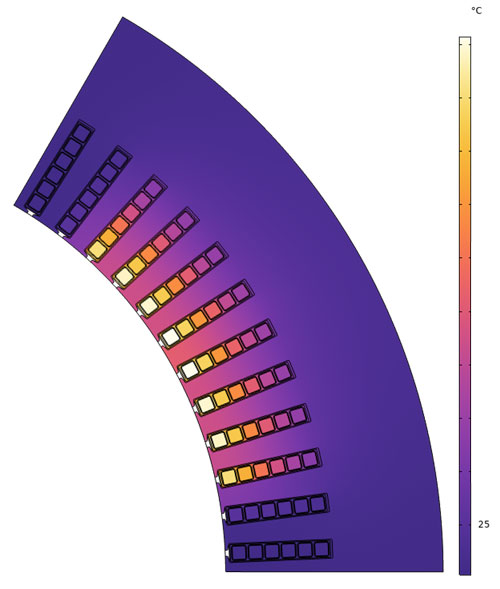
Figure 2: Temperature distribution after 30 s transient heat up in adiabatic conditions at 200 A(peak) and 1000 Hz
At system level, the inverter generates the current waveforms required to control the electric machine’s performance and control strategies are developed accordingly to enhance overall system behavior. Using the previously detailed multiphysics approach enables a precise assessment of how those current waveforms impact electrical machine losses. This capability permits us to optimize the influence of innovative control strategies at inverter level on vehicle efficiency as demonstrated in [1], as part of our model driven innovation and optimization capability.
3. Model Driven Innovation and Optimization
Innovation and optimization of the iDM are supported by several key pillars. One of them is Process and Design Development. Process and design tools are evolving in parallel, allowing engineers to explore innovative geometries and structures that were previously unattainable. Such optimization has been performed for a heatsink used in a power electronincs device, resulting in complex geometry as shown on Fig.3. A cooling liquid is turbulently flowing inside the heatsink to cool two heat sources. The topology optimization has been set to minimize the temperatures of the heat sources and their temperature differences, while being below a pressure drop threshold. It defines the inner geometry. The synergy between 3D metal printing and numerical multiphysics topology optimization has become a key driver for innovative solutions.
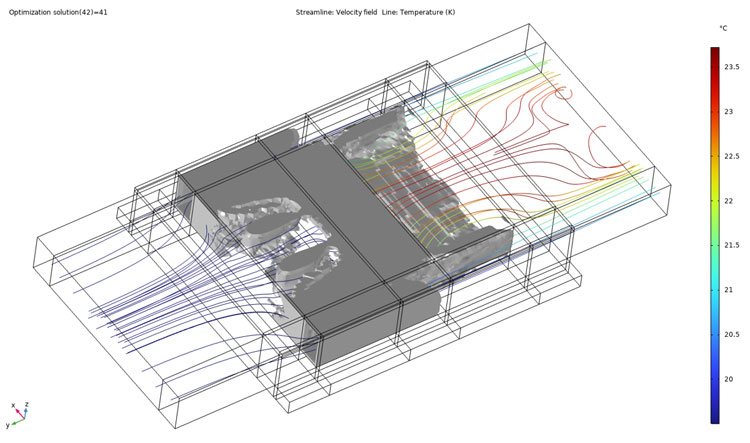
Figure 3: 41st iteration of 3D topology multiphysics optimization with a turbulent flow and two heat sources at the lowest surface
A second pillar is driven by AI breakthroughs in materials development. Historically, geometry/function and material selection have always been closely intricated in the development of components. Recent progress in artificial intelligence has significantly accelerated the growth of Computational physics, chemistry, and materials science. These approaches leverage quantum mechanics to predict the atomistic structure of materials and translate it into macroscopic physical properties. Machine‑learning‑based computational physics now enables tailoring a material’s atomic structure to meet specific performance requirements [3].
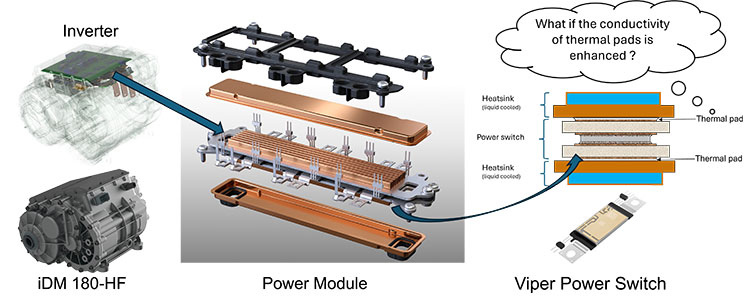
Figure 4: Integrated Drive Module iDM 180-HF, illustrating the inverter, its liquid cooled power module and its Viper power switches.
The third pillar is enabled by Digital Twin, which builds upon the first two approaches to optimize physical components and reinforce system‑level foundations. This pillar focuses on the development and evaluation of innovative control algorithms and new iDM control strategies [4]. Although the inherent complexity of the vehicle system impacts Simulation time, preliminary insights can often be obtained within only a few electrical cycles. While advanced control algorithms can be evaluated on a millisecond timescale, the full potential of Digital Twins is realized when combined with Reduced Order Models (ROMs), which significantly
accelerate simulation performance.
4. Use Case
The Digital Twin methodology makes it possible to extract high level, system wide performance indicators while still capturing the detailed behavior and interactions of individual components. Fig.4 illustrates this multiscale capability by zooming from the overall iDM architecture comprising the inverter, electric machine, and transmission, down to ist subcomponents. Within the inverter, for example, the power module is modeled at a granular level. It consists of a stacked assembly that typically includes heatsink, thermal interface material (such as a thermal pad), and the power semiconductor switch. This detailed representation ensures that local thermal electrical behavior including parasitic phenomena are accurately captured and propagated up to system level performance metrics.
In this study, a vehicle Digital Twin embedding all multiphysics complexity into one single environment is employed. Electric machine, inverter and transmission models are interconnected and brought into a full vehicle representation. This includes detailed, non-exhaustively, thermal management, intelligent control strategies, thermal models, cooling system, lubrication.
Based on the vehicle Digital Twin simulation over a WLTP cycle, the results presented in Fig. 5 demonstrate the benefit of combining detailed component-level analysis with a system-level approach to assess global performance indicators.
The power switch temperatures can be accurately estimated at both granular and helicopter views. The evolution of the maximum power switch temperature over a single WLTC for three different thermal conductivities of the pad can be evaluated. The temperature profile exhibits alternating peak and cool‑down phases, driven by several factors such as instantaneous current demand, DC-link voltage, switching frequency, and the applied control strategies. In addition, the absolute power losses are strongly influenced by the semiconductor die Technology itself, which affects both switching and conduction losses. While many studies assume a constant coolant temperature at the heatsink inlet, vehicle thermal management has a major impact on component thermal behavior. Radiator valve actuation, front fan operation, and the overall thermal Management architecture and control strategy directly influence the inlet coolant temperature evolution. Consequently, these effects lead to different maximum temperature levels for the power electronic components, highlighting the importance of a fully coupled electro‑thermal‑system simulation approach.
5. Conclusion
The development of new numerical methodologies, validated through experimental investigations, enables a deeper understanding of coupled field effects, such as fluid, mechanical, thermal, electric, magnetic, and parasitic phenomena, and their impact on system behavior. By combining detailed component level multiphysics models with vehicle level driving cycles, BorgWarner’s Digital Twin provides system wide performance indicators while preserving physical fidelity. This capability transforms simulation from an analysis tool into a decision making and optimization platform for architecture selection, material choices, and control strategies. The ability to assess component-level impacts at granular view while simultaneously maintaining a helicopter view at system level is a key enabler for rapid innovation and robust holistic optimization.
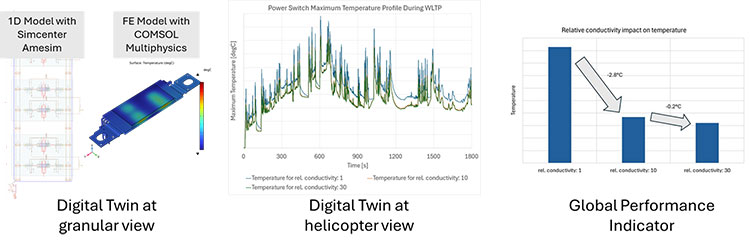
Figure 5: Overview of Digital Twin capabilities from granular to helicopter view providing global performance indicators at vehicle system level.
Sources:
[1] Bossi, A., Bourniche, E., Leblay, A., David, P. et al., „Digital Twin, A Multiphysics Numerical Tool Chain for Next Generation Electric Drive Design,“ SAE Technical Paper 2025-01-8624, 2025.
[2] Colombo, L., Reinap, A., Fyhr, P., Alaküla, M., „Enhancing Core Loss Tracking Accuracy in Stator Cores: A Comparative Assessment of Static and Dynamic Jiles-Atherton Model Formulations,“ IEEE Transactions on Magnetics, vol. 61, no. 8, pp. 1-12, Aug. 2025, Art no. 7300512
[3] Boziki, A. “HPC in Physics: Enabling Simulations and Accelerating Data Processing,” Presentation at SCynergy, April 2025.[3]
[4] Nanjundaswamy, H., Deussen, J., Mayer, A. et al., “A Step Beyond Two, “Next Generation Multi-Level Traction Inverter with Clean Wave Technology”, 46th International Vienna Motor Symposium 2025, ISBN: 978-3-9504969-4-9
No-Compromise Propulsion for the Heavy-Duty Electric Pickup
How a 2-speed integrated e-Beam axle removes the final barrier to practical heavy-duty electrification Dan Ouwenga, Director – Product Management, Dauch The promise of electric propulsion has always been straightforward: instant torque, smooth drivability, reduced NVH, and lower lifetime operating costs. For light-duty passenger vehicles, that promise has largely been delivered. But for the heavy-duty […]
Continue reading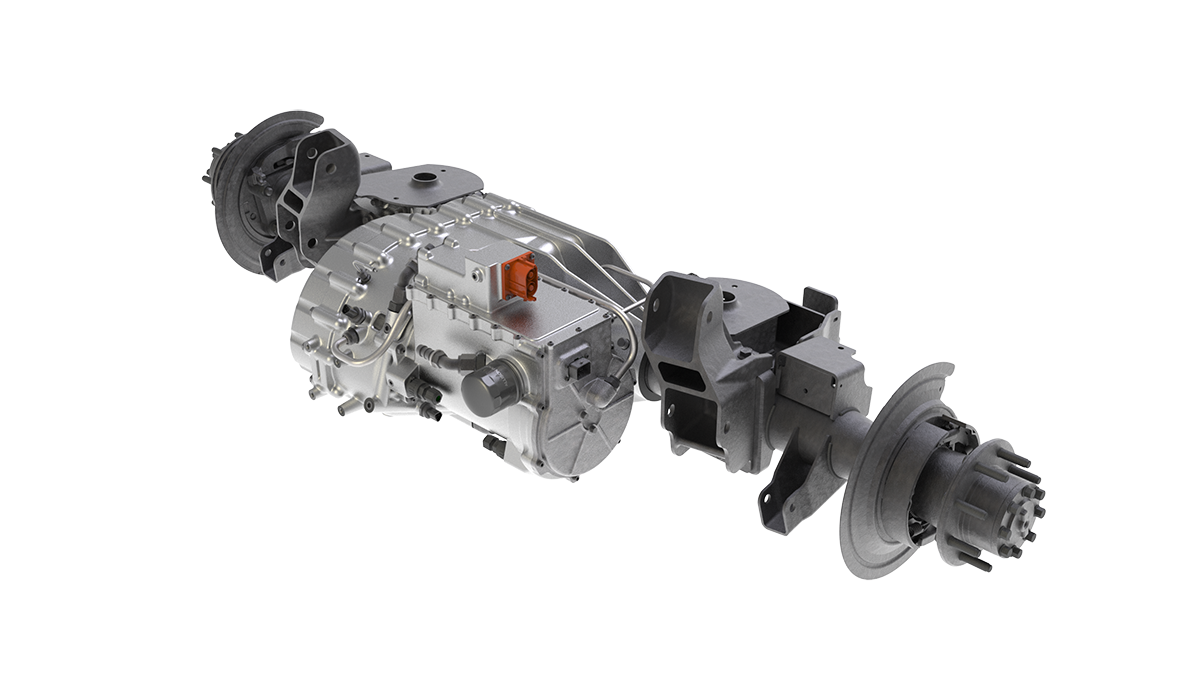
No-Compromise Propulsion for the Heavy-Duty Electric Pickup
How a 2-speed integrated e-Beam axle removes the final barrier to practical heavy-duty electrification
Dan Ouwenga, Director – Product Management, Dauch
The promise of electric propulsion has always been straightforward: instant torque, smooth drivability, reduced NVH, and lower lifetime operating costs. For light-duty passenger vehicles, that promise has largely been delivered. But for the heavy-duty pickup truck – the Class 2b and Class 3 work vehicles that North American customers depend on to tow, haul, and perform under sustained load – first-generation electric architectures have fallen meaningfully short.
The technical challenge is the absence of a propulsion solution that can simultaneously deliver the launch torque, continuous power, and thermal robustness that HD truck customers require. A single-speed electric drive unit, however well-engineered, faces an inherent constraint: optimizing for peak launch torque forces a tradeoff against motor speed, mass, and efficiency at cruising conditions. The result is a system that can feel impressive off the line but struggles under sustained towing load which is precisely the use case that defines this segment.
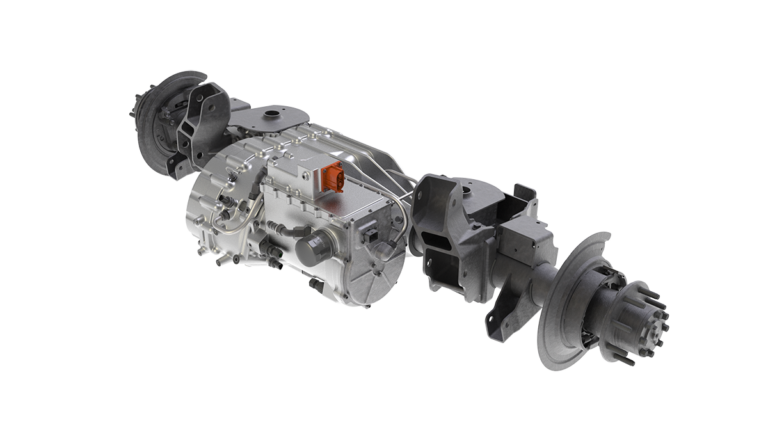
Dauch’s HD 2-speed electric rear e-Beam was developed specifically to address that tradeoff. The architecture integrates a nested 2-speed planetary differential within the axle housing that enables low-range torque multiplication without placing additional torque loads on the upstream components. In low range, the system delivers between 16,000 and 25,000 Nm of wheel torque against a gear ratio exceeding 35:1 – numbers that comfortably exceed the demands of the most aggressive HD towing and gradeability cycles. In high range, the system transitions seamlessly to a configuration optimized for efficiency and highway operation, with the motor running in its peak efficiency zone.
The 2-speed design also enables the use of a smaller, lighter, highspeed induction motor – reducing diameter from a typical 230–260 mm down to 180 mm – which saves mass, improves packaging, and eliminates the supply chain and demagnetization risks associated with rare earth permanent magnet alternatives. A new flooded stator cooling system, using an integrated air gap sleeve to direct oil flow uniformly across the Copper windings, enables sustained motor output at more than double the current density of conventional cooling approaches. The result is continuous rated power above 225 kW – not a peak figure, but a sustained capability this single e-Beam axle can maintain through a full Davis Dam or Baker Grade simulation without thermal derating.
The inverter also benefits from innovative cooling technology. A folded fin heat sink design allows direct oil cooling of the silicon carbide switching devices, reducing junction temperatures and improving continuous current capability. Benchmarked against competing architectures, this configuration delivers more than 50% improvement over a conventional isolated back plate module – meaning equivalent continuous power with significantly less silicon area, reducing cost while improving thermal margin.
Real-world validation has confirmed what the simulations predicted. A prototype 2-speed HD e-Beam was integrated into a RAM Heavy-Duty BEV conversion vehicle and subjected to a full validation program spanning dynamometer testing, cold weather operation at Aumovio’s Brimley, Michigan development center, and hot weather SAE J2807 trailer tow simulation at the General Motors Yuma Desert Proving Ground in ambient temperatures exceeding 100°F. The vehicle successfully completed J2807 grade requirements at 26,000 lbs gross combined weight rating in two-wheel-drive – a demanding threshold that no comparable production-ready electric rear axle has achieved.
Thermal data captured during Davis Dam simulation at 45 mph in low range showed a 14–18% reduction in EDU operating temperatures compared to high range operation at the same load. That margin is not incidental – lower thermal load directly enables higher continuous power, longer towing duration, and greater calibration headroom. OEM customers present during vehicle demonstrations described the shift behavior as smooth and comparable to a traditional automatic transmission.
The technology is protected by a portfolio of 13 issued and pending patents, including two developed specifically for this application. Third-party freedom-to-operate searches have identified no blocking patents.
What this body of work ultimately demonstrates is that propulsion readiness can be removed from the list of barriers to HD electrification. The technical constraints that have prevented practical BEV and EREV adoption in the heavy-duty pickup segment – launch torque, thermal robustness under sustained load, production-viable shift quality – have been resolved. The remaining variables are market timing, energy storage and infrastructure solution readiness, and OEM program pacing. Those are real constraints, but they are external to the propulsion system. When the market conditions are right, Dauch is ready to provide an electrified HD solution.
Taurus: a powerful mix of industry standard and lessons learned through experience
Automotive drivetrain engineers aim to perfect and refine electric drive lines to the point where they operate right at the edge of what is physically possible. This requires simulation models, to act as cost function in the design process or to train reduced order models. These latter models should incorporate all physical loss and performance […]
Continue reading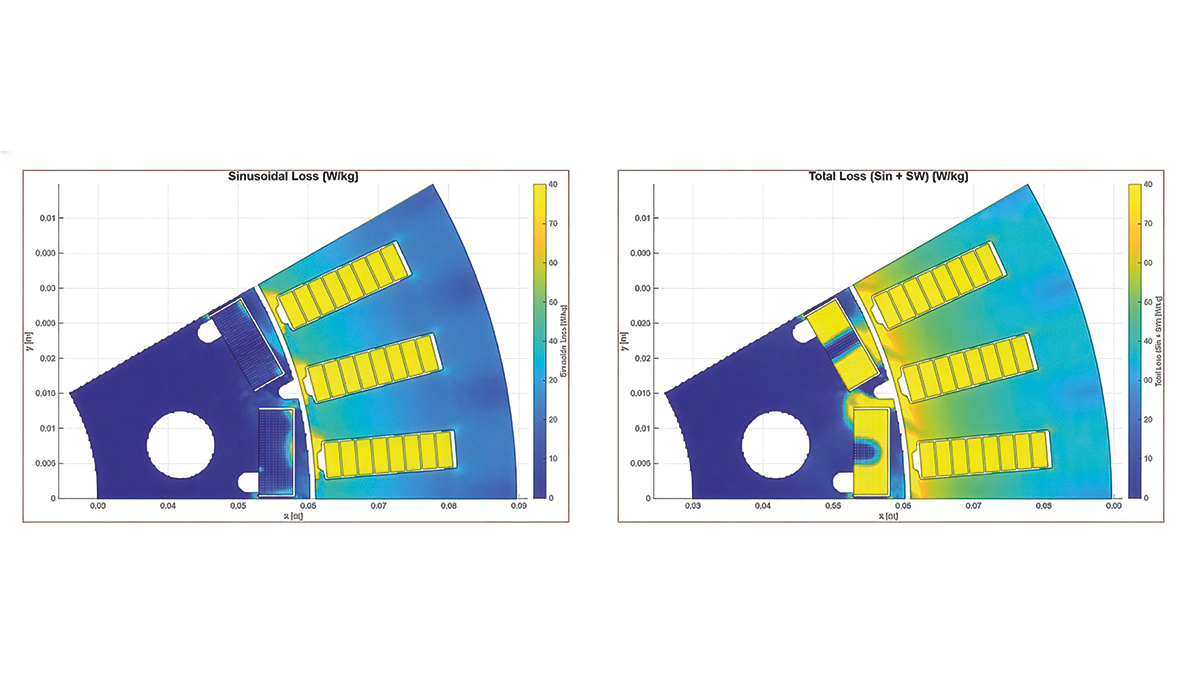
Taurus: a powerful mix of industry standard and lessons learned through experience
Automotive drivetrain engineers aim to perfect and refine electric drive lines to the point where they operate right at the edge of what is physically possible. This requires simulation models, to act as cost function in the design process or to train reduced order models. These latter models should incorporate all physical loss and performance mechanisms and should be computationally efficient at the same time. Often however, important contributions to efficiency or performance drops are hidden in empirical build factors. These factors can only be quantified too late in the design process, i.e. after testing of the first prototypes.
Based on our experience we developed Taurus, a simulation tool chain that uses industry standard tools, but adds the necessary embedded experience to capture detailed impact from component level, all the way up to the drivetrain level.
Use case: Taurus eliminates the use of build-factors for motor loss prediction
Detailed modelling in Taurus allows to calculate in a computationally efficient way the loss contributions in the motor induced by manufacturing effects and high-frequency operation. This includes degraded material properties at the cutting edges and mechanical pressure for the manufacturing effects. PWM switching induced losses in the magnets, copper, and iron are also calculated. Figure 1 illustrates the delta in amount of losses and their spatial distribution by including these effects. Prior to the calculations, additional material characterizations have been carried out.
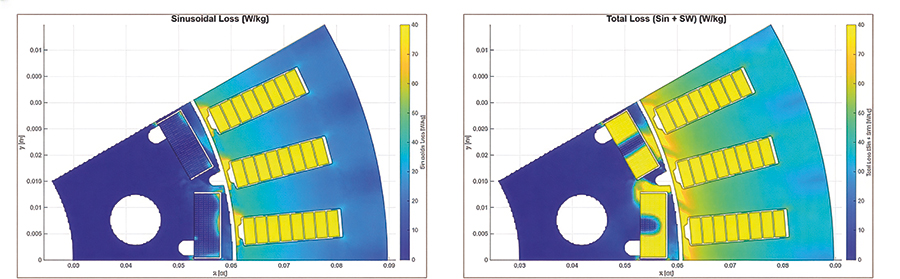
Figure 1: ignoring PWM-induced losses and manufacturing effects leads to incorrect loss distribution data.
This spatial loss information is calculated for all operating points and thus allows further detailed analysis utilizing the data in time-based simulations to identify hot spots or to calculate cycle consumption for the full driveline.
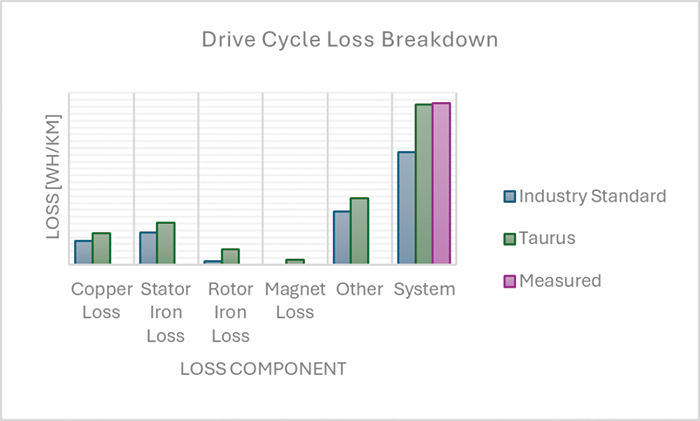
Figure 2: Cycle loss breakdown: industry standard tool (build-factors) vs. Taurus (first principles).
The net effect of this increased fidelity on a drive cycle consumption is visible in Figure 2. It compares the loss predictions from an industry standard tool (using build factors) with the first-principles approach from Taurus and shows the correlation with measurements.
Conclusion
With limited additional characterization, a detailed and computationally efficient calculation allows to optimize cycle consumption and avoid local hot spots. By adhering to two main principles: leveraging industry standard tools and including loss mechanisms on a first principles basis, Taurus enables fast driveline R&D support from concept to troubleshooting.
Introducing DRV Solutions
DRV Solutions is an engineering partner for advanced electric drive lines, supporting from concept to validation. We combine motor & power electronics design, full driveline analysis, and system integration expertise in our Taurus Toolkit. This enables us to accelerate your design and troubleshoot performance issues.
How deeptech is already revolutionising EV powertrain engineering
Simon Shepherd, Head of eDrive and Chief Product Officer, Monumo Deeptech is transforming EV powertrain engineering by introducing new levels of computational freedom, speed, and system integration, allowing companies to achieve levels of performance and cost reduction previously out of reach through existing methods.
Continue reading
How deeptech is already revolutionising EV powertrain engineering
Simon Shepherd, Head of eDrive and Chief Product Officer, Monumo
Deeptech is transforming EV powertrain engineering by introducing new levels of computational freedom, speed, and system integration, allowing companies to achieve levels of performance and cost reduction previously out of reach through existing methods.
Nature-Inspired System Design
Modern engineering increasingly draws inspiration from nature, where efficiency is achieved through adaptation and system-level harmony. EV developers are now using advanced computational tools to explore organic, highly optimised component shapes and system architectures; mirroring, for example, how a tree or a bird’s wing achieves a perfect balance of forces. Unlike natural evolution, which takes millennia, digital tools allow engineers to iterate and converge on superior solutions within weeks, critical for keeping pace with rapidly changing industry and regulatory demands.
Overcoming Conventional Barriers
Classic engineering methods, which adjust just a handful of design parameters, can no longer solve today’s complex powertrain optimisation challenges. Next-generation computational platforms let engineers evaluate vast combinations of component geometries and system parameters – tens of millions, in some cases -far beyond what’s possible with manual approaches or simple brute-force computation. Intelligent automated routines and novel search strategies deliver the breakthroughs needed when conventional software and human time simply cannot scale
Real-World Results at Scale
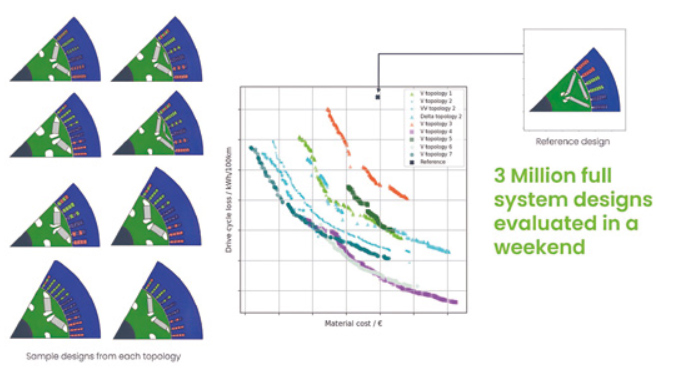
Breakthrough deeptech platforms – like Monumo’s Anser® Engine – are now enabling EV makers to rapidly generate and assess hundreds of thousands of valid designs for components such as motors and gearboxes.
- In recent projects, 250,000+ viable motor designs were created in just three days, trimming magnet use by more than 8 % and cutting costs by 4 %, saving €15 per vehicle. [1]
- Expanding system optimisation to include additional variables (e.g. stator dimensions, gears, and motor length) produced over 550,000 valid solutions in five days, achieving savings as high as 11 % (€43 per unit), or reducing losses by 12.5 % at no added cost. [2][1]
The Next Frontier
The emergence of “generative design” tools – able to propose promising designs directly – suggests future engineering cycles will be radically compressed, possibly delivering optimal solutions within minutes instead of days. Monumo’s technology roadmap forecasts continued gains as greater systemlevel freedom, parametric control, and digital intelligence are brought to bear:
- Motor-only optimisation: ~5 % cost reduction
- Whole-system integration: 10 %+
- Projected potential with full-system and freeform optimisation: 20 %+ cost reduction.
Deeptech is no longer a future prospect: it is already driving major advances in EV powertrain cost, weight, and performance, for the manufacturers prepared to fully adopt it.
Simon Shepherd is Head of eDrive and Chief Product Officer at Monumo, a deeptech startup based in Cambridge and Coventry, UK, specialising in AI-driven engineering solutions. Ready to explore how deep-tech can transform your powertrain development? Contact Simon.Shepherd@Monumo.com, see more at monumo.com listen to him speak about our latest developments at 11:15 on Wednesday 3rd December in Deep Drive Track L.
AI-Powered Engineering Software for Electric Drives: OPED
Boosting powertrain development with agility, fast time-to-market and optimal product-market fit Dr. Martin Hofstetter, Head of E-Mobility and Alternative Drivetrains Research Group, Graz University of Technology Dr. Dominik Lechleitner, Senior Researcher, Graz University of Technology Designing electric powertrains is challenging: engineers must quickly find competitive designs and optimize the system for multiple key performance indicators […]
Continue reading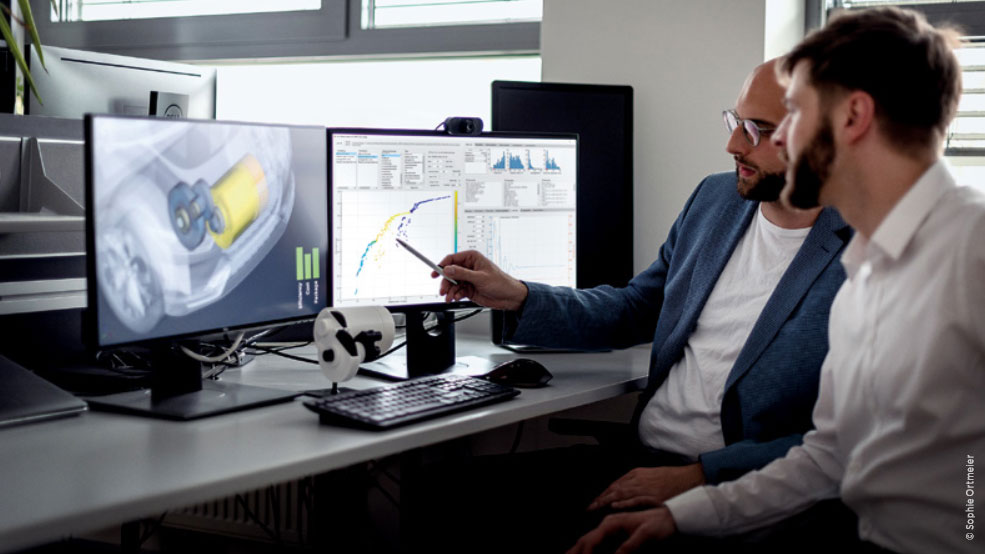
AI-Powered Engineering Software for Electric Drives: OPED
Boosting powertrain development with agility, fast time-to-market and optimal product-market fit
Dr. Martin Hofstetter, Head of E-Mobility and Alternative Drivetrains Research Group, Graz University of Technology
Dr. Dominik Lechleitner, Senior Researcher, Graz University of Technology
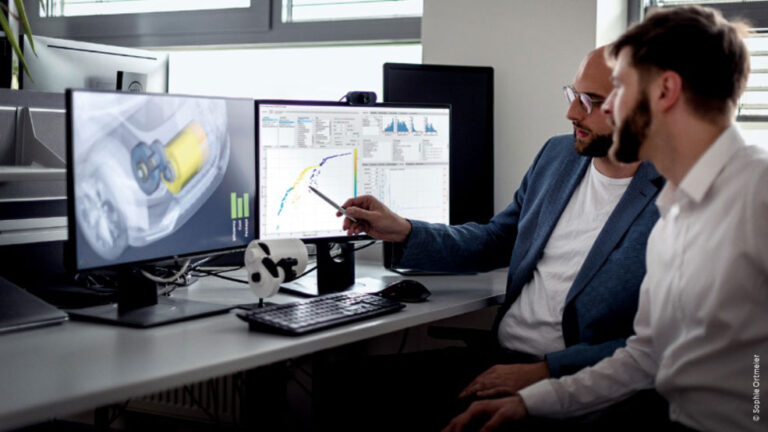
Designing electric powertrains is challenging: engineers must quickly find competitive designs and optimize the system for multiple key performance indicators (KPIs) at once, e.g., efficiency, cost, and package. The industry-approved engineering software OPED (Optimization of Electric Drives) can do this automatically by combining parametric system models with an AI-based optimization algorithm and exploring hundreds of thousands of design variants within 24 hours.
Development of Electric Drives
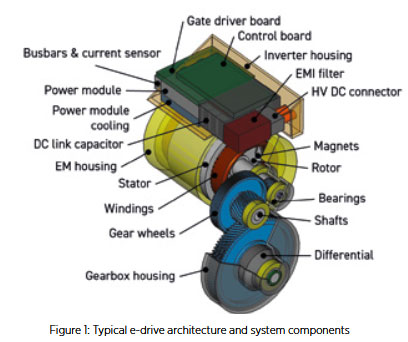 The development of electric drives (e-drives) is a highly complex and interdisciplinary process. Engineers must simultaneously design numerous electrical and mechanical subsystems (see Figure 1) that must optimally work together while meeting ambitious system targets for performance, efficiency, cost, and packaging. These objectives are often conflicting – improving one typically worsens another. Moreover, this highly challenging task must be solved under strong time pressure as it is critical for ambitious time-to-market goals. Therefore, engineering of electric drives demands digital tools capable of handling multi-criteria optimization and cross-domain interactions in an integrated way to quickly provide solid answers to complex questions.
Revolutionizing the Development Process with OPED
The software OPED fundamentally changes how e-drives are developed. Instead of relying on sequential design steps and manual iterations, OPED uses parametric system models combined with an AI-powered evolutionary optimization algorithm to explore the full design space automatically. The outline of OPED is shown in Figure 2: Based on specified e-drive system requirements, the design problem is encoded as a multi-objective optimization problem. The intelligent design algorithms then generate different e-drive designs, which are evaluated by system analysis models. Based on the calculated design properties, the optimization algorithm rates the generated designs and aims at improving them based on the best found designs so far. This closed loop of design analysis and synthesis continues until no more improvements are observable and converging behavior is present. Furthermore, self-learning artificial neural networks boost the optimization performance by guiding the optimization algorithm and directing its search towards promising design regions. Within 24 hours of computation time, around 50 design parameters are varied, hundreds of thousands of possible e-drive designs are evaluated, and the most promising ones are identified based on multiple concurrent objectives such as
- performance,
- efficiency,
- cost,
- package integration,
- carbon footprint,
and any other design objective – everything that can be calculated, can be optimized. The result is a Pareto front of optimal solutions, providing engineers and decision makers with a clear overview of achievable trade-offs and design potentials. By merging simulation, optimization, and system understanding in one integrated workflow, OPED enables rapid development cycles. Agility is key: every request for quote (RFQ) or sudden project change request (PCR) is replied with fast and solid answer, tailor-fit to the specific requirements. Taking informed decisions early ultimately leads to an optimal product-market fit for the e-drive system and a fast time-to-market.
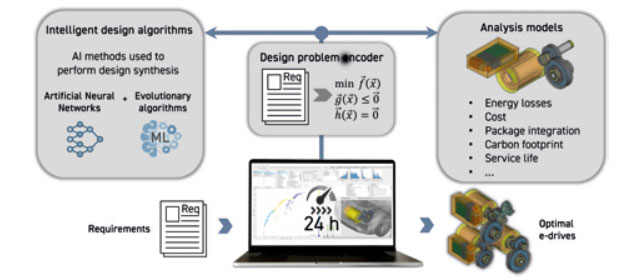
Figure 2: From e-drive system requirements to optimal e-drive solutions with OPED
Master Challenging Targets of Package, Efficiency and Cost within 24 Hours
OPED’s strength lies in its versatility. The software can be applied to a wide range of design questions – from component sizing and material selection to system-level trade-offs and product family development. Moreover, as system requirements are often vague and uncertain in the early development stages, OPED can be utilized for requirements engineering. Another powerful capability lies in the full 3D package investigation: OPED not only finds designs that comply with a given 3D target installation space, it also provides possible packaging options within the available space. An example is shown in Figure 3, which depicts two possible design solutions for an e-drive: One with the smallest possible length and one with the smallest possible height (e.g., providing additional trunk space for applications at the rear vehicle axle).
Besides package feasibility, both energy efficiency and cost are always critical and conflicting KPIs. To select the most suitable solution, OPED provides a Pareto front of e-drive designs (Figure 4), where each point represents one optimal design solution. Accordingly, engineers and decision makers are provided with a solid foundation for selecting the most suitable system solution respecting the specific goals of each vehicle application. As each design solution from OPED contains detailed technical information – including a 3D CAD model – a seamless and smooth transition from OPED results to the A-sample development is ensured. This makes OPED a powerful enabler for fast and digital electric powertrain development.
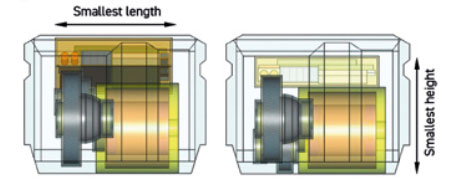
Figure 3: Example of e-drive packaging options; available installation space is shown in blue
Concluding, OPED enables engineers and decision makers to
- respond quickly to requests for quote (RFQs) and project change requests (PCRs),
- solve conflicting KPIs & do requirements engineering,
- develop competitive solutions with product-market fit,
- design optimal product families, utilizing commonality and carry-over-parts.
OPED is established in practical use at a leading global automotive tier 1 supplier – with high potential forscaling across other suppliers and OEMs.
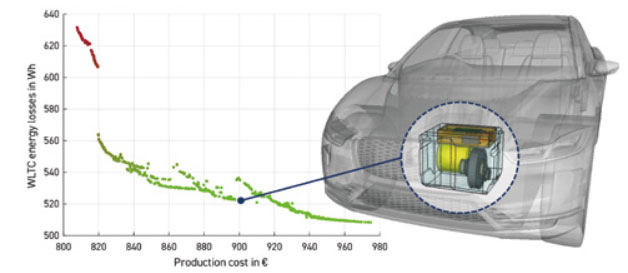
Figure 4: Select the sweet spot of energy efficiency vs. production cost (vehicle model from [1])
Sources:
[1] Holiday, D. (2021). Jaguar I-pace Concept. https://sketchfab.com/3d-models/jaguar-i-pace-concept-3ea106994ec9442eb4b72906026fa215. CC Attribution: https://creative-
commons.org/licenses/by/4.0/, modified. [Online; accessed 13 February 2024

From Lab to Exhaust: A Startup’s Breakthrough in CO2 Transformation
Alicja Stankiewicz, CTO, Coat-It Marek Turkiewicz, CEO, Coat-It Pollution kills more people globally each year than war, hunger, or disease. And at the heart of this crisis is carbon dioxide (CO2) – the primary greenhouse gas driving climate change.But what if CO2 could be split and transformed before it ever leaves a tailpipe?
Continue reading
From Lab to Exhaust: A Startup’s Breakthrough in CO2 Transformation
Alicja Stankiewicz, CTO, Coat-It
Marek Turkiewicz, CEO, Coat-It
Pollution kills more people globally each year than war, hunger, or disease. And at the heart of this crisis is carbon dioxide (CO2) – the primary greenhouse gas driving climate change.But what if CO2 could be split and transformed before it ever leaves a tailpipe?
That’s the vision behind RainIons, a U.S.-based startup that has developed a revolutionary powder capable of reducing greenhouse gas emissions – including CO₂, NOx, and hydrocarbons – by transforming them into safe, stable molecules. The application of technology is currently being developed further by COAT-IT, a Polish startup specializing in the engineering of high-temperature-resistant coatings tailored for practical automotive applications.
The Science Behind the Solution
The innovation combines pyroelectric and piezoelectric minerals with naturally occurring radioactive materials (NORM) in a conductive matrix. This unique blend emits alpha particles, negative ions, and electrons – without external power. These particles ionize pollutants and split strong molecular bonds, including those in CO₂.
Independent studies and internal evaluations suggest the solution can significantly reduce CO₂ emissions across a variety of conditions. At elevated temperatures (around 500 °C), reductions have been observed above of 50 %. Even in lower temperature environments (70 – 200 °C), meaningful decreases in CO₂ – typically within a 25 – 30 % range – have been noted, with no harmful byproducts identified. In moisture-rich settings, reductions of up to 50 % indicate that water may play a catalytic role in the
transformation process.
From Tourmaline to Transformation
Inspired by earlier research on tourmaline-infused asphalt, the tourmaline-based “negative ion powder” was infused into a conductive coating and applied it to a diesel muffler. FTIR spectroscopy revealed that CO₂ was being split into graphite and oxygen, with water concentration directly influencing reaction efficiency.
What’s Next?
COAT-IT is now developing durable, high-temperature coatings for commercial deployment. The next phase includes real-world trials using diesel engines and custom exhaust systems. The goal: to quantify transformation products and optimize substrate design for maximum pollution reduction.
If successful, this technology could redefine emissions control – turning exhaust systems into active climate solutions.
Best-in-class Thermal Assessment of Electric Powertrain
Mario Theissl, CEO, Theissl Systems GmbH THEISSL systems enables precise measurement of temperature and torque in electric drive units with its minimally invasive sensor telemetry technology that is tailored specifically to each customer application. These systems can be seamlessly integrated into existing drive components with minimal need for system modifications, allowing for highly accurate measurements […]
Continue reading
Best-in-class Thermal Assessment of Electric Powertrain
Mario Theissl, CEO, Theissl Systems GmbH
THEISSL systems enables precise measurement of temperature and torque in electric drive units with its minimally invasive sensor telemetry technology that is tailored specifically to each customer application. These systems can be seamlessly integrated into existing drive components with minimal need for system modifications, allowing for highly accurate measurements under real-world test bench and vehicle conditions.
With project-specific telemetry units for E-machine rotors gearbox shafts and clutches, the original characteristics of the DUT are inherently preserved while making optimal use of the available installation space. All systems are entirely contactless, transmitting wirelessly to the evaluation unit to ensure reliable performance on high-speed rotating components.
At the core of thermal EDU characterization is the choice of the right sensor elements. Therefore, as a full-service partner, THEISSL systems supports the entire measurement process starting from the definition of test points and the selection of suitable sensors all the way to data analysis after a successful test run.
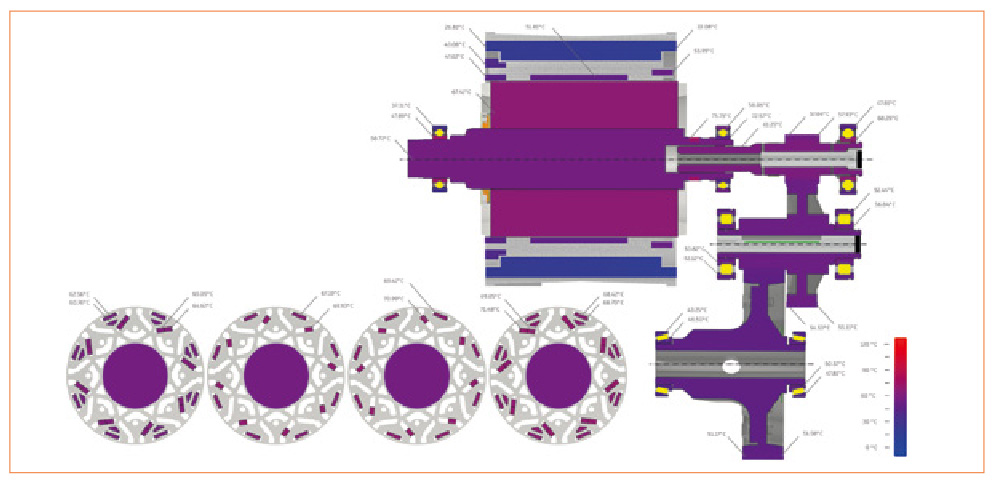
Even in demanding applications, such as rotor temperature measurements in electric drives, up to 32 thermocouples can be used to gain vast knowledge of the thermal behavior of the DUT. Another variant of our telemetry boards is just 10.5 mm wide, foldable, and bendable around tight radii, which enables temperature measurements on gear teeth and bearing inner rings on transmission shafts. Furthermore, it could be mounted on the rotor shaft, for gearbox input torque measurement e.g. to determine system efficiency.
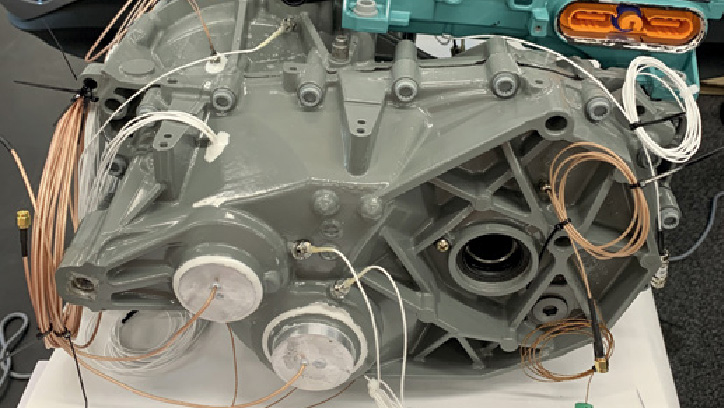
This measurement technology was implemented in a VW ID.3 demonstrator vehicle, which is showcased at CTI 2025 in Berlin. The system captures inner and outer bearing ring temperatures, gear tooth temperatures, as well as torques at the gearbox input shaft and side shafts. In the E-drive rotor temperature measurement, a telemetry system capturing 16 individual test points was complemented by four additional sensors on the stator windings, giving unprecedented insights into the thermal behavior of the
vehicle’s drive train.
This data, collected over more than 10,000 km of test drives then formed the basis for the training of a Thermal Neural Network (TTN) modelling the thermal behavior of the E-machine. Due to the large number of temperature measurement points, the temperature estimator for the rotor magnets achieved a highly respectable accuracy of ±1.5 K.
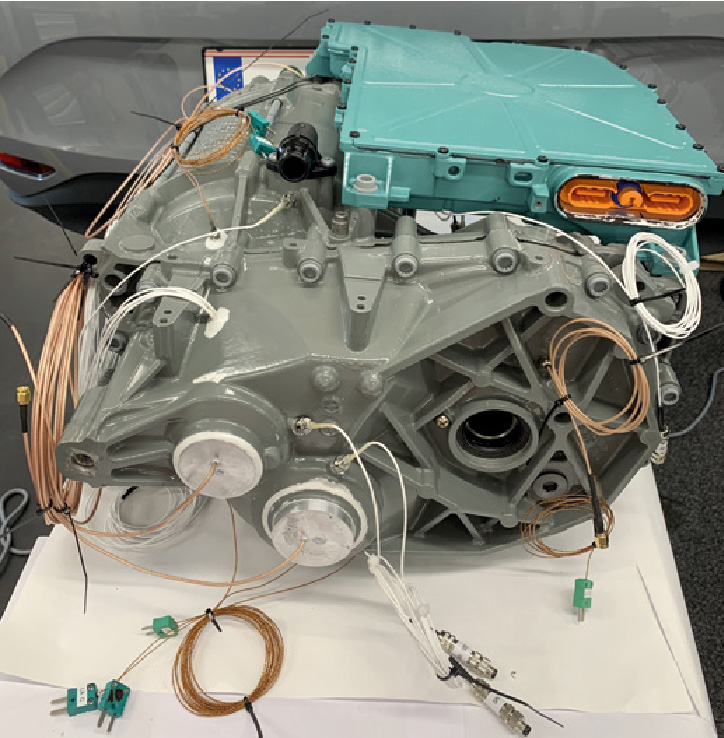
Application example: Thermal testing of the electric drive unit of the VW ID.3
A New Material Solution for Low Wear, Low Friction, and Electrical Insulation in Automotive Transmissions
Geoff Lewis, Technical Director, Duvelco What is a New Material? Being ‘new’ is claimed with some regularity in the world of polymers; however, step changes in performance are less frequent. Here, I am going to look at an innovation that may pass the test and rightfully be called a new material. The polymer in question […]
Continue reading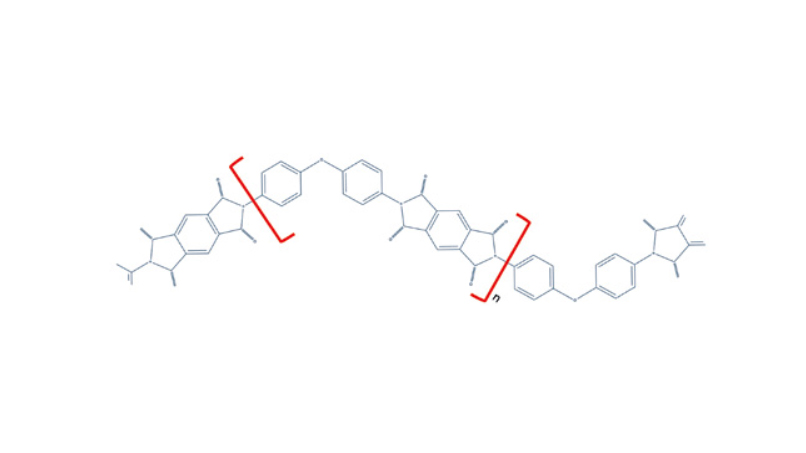
A New Material Solution for Low Wear, Low Friction, and Electrical Insulation in Automotive Transmissions
Geoff Lewis, Technical Director, Duvelco
What is a New Material?
Being ‘new’ is claimed with some regularity in the world of polymers; however, step changes in performance are less frequent. Here, I am going to look at an innovation that may pass the test and rightfully be called a new material. The polymer in question has the trade name Ducoya.
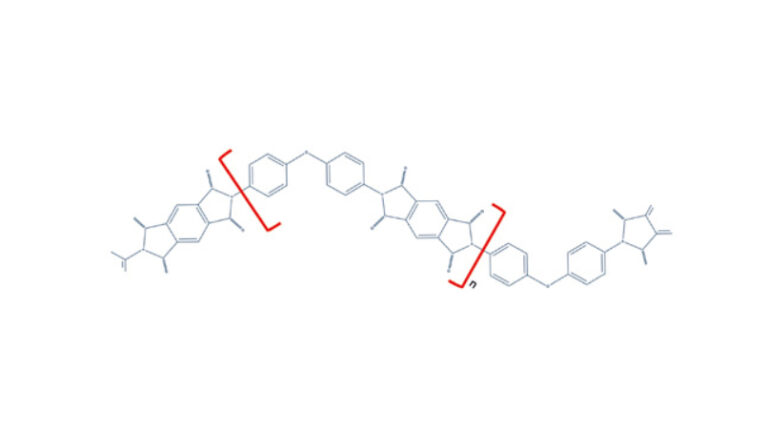
In terms of chemical type, it is a semicrystalline thermoplastic block copolymer bearing the unfamiliar name PMDA-ODA or, in long form, PyroMellitic DiAnhydride – 4,4‘-OxyDiAniline. The repeat unit is shown below:
This is a polyimide with an ‘I’; not a polyamide. Polyimides are a vast and rapidly growing class of polymers. The number of polyimide papers written annually has exploded in recent years. Polyimides include thermosets, thermoplastics, amorphous, semicrystalline, and photo-imageable materials.
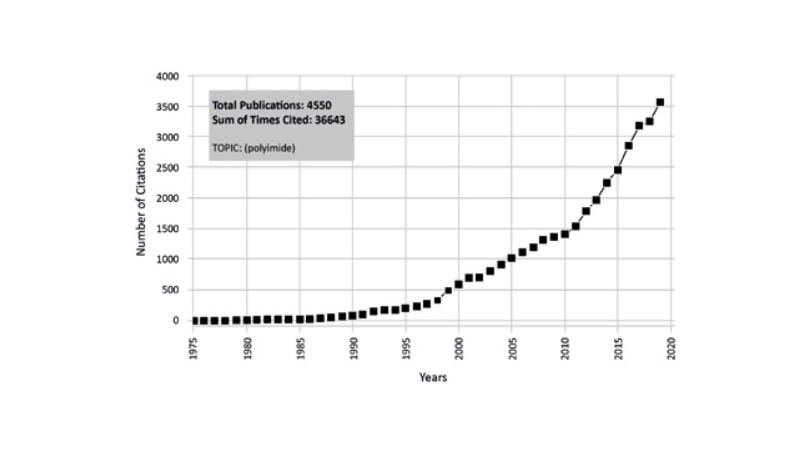
The above graph shows the number of papers regarding polyimide. Source: Researchgate – Number of citations per year from 1975 to 2019, Web of Science.
Some may recognise this molecule as being from the 1960s; however, that is not the new part. This molecule, initially developed for NASA’s space programme, has long seemed too difficult to source and too expensive for many automotive applications.
This is especially the case as the industry moves into an era of cost-competitive BEVs, and, from a European and North American perspective, an era of low-cost, possibly subsidised Chinese BEV imports to compete with.
So, if it isn’t the molecule, what is new?
The innovation here is a new, patented manufacturing process that also covers the resulting material. Many high-performance plastics, including those produced by the traditional PMDA-ODA Manufacturing method, utilise monomers dissolved in harmful, high-VOC solvents. The environmental and high-cost considerations of these solvents mean they must be separated, distilled, and reused, consuming a large amount of energy in the process.
Ducoya avoids most volatile solvents used in the process and instead employs supercritical carbon dioxide and a catalyst.
Therefore, it is straightforward to separate the polymer from supercritical carbon dioxide by lowering the pressure. The carbon dioxide is repressurised and stored for reuse. This single step greatly streamlines manufacturing at scale, making the polymer considerably more accessible for automotive applications. However, this is not the end of the story. While the original aim of the invention was to simplify manufacturing at scale, when the properties of the resulting polymer were compared with those of its traditional predecessors, something remarkable emerged – dramatically improved mechanical and tribological properties.
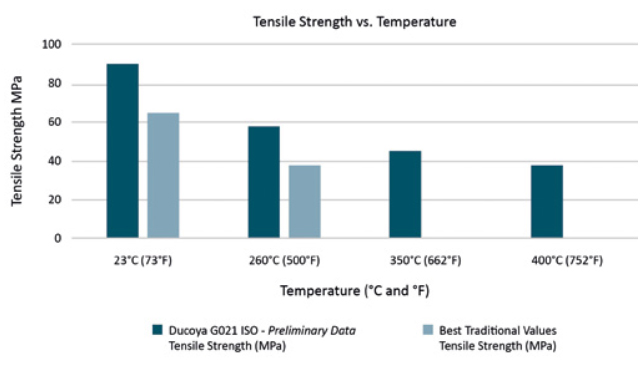
The above graph consists of Ducoya preliminary data – arithmetic mean of five specimens, and best traditional values taken from published datasheets, none of which reported data over 260 °C.
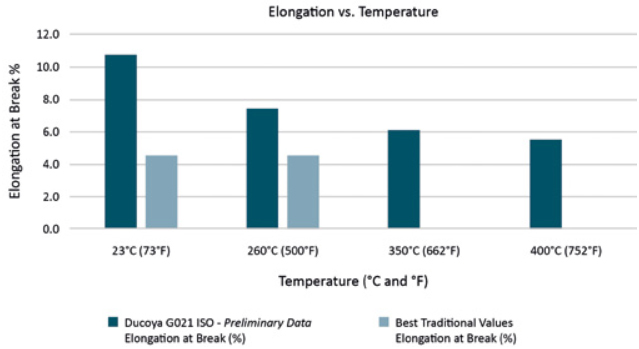
The above graph consists of Ducoya preliminary data – arithmetic mean of thirty specimens, and best traditional values taken from published datasheets, none of which reported data over 260 °C.
Datasheet1
Ducoya G021 ISO is a filled version of Ducoya, containing 15 % wear- and friction-optimised graphite. Initial investigations of tribological properties in dry conditions indicate a significant improvement in wear factor compared to the best traditionally produced polyimides of this type. While much work remains to be done with this
specific molecule, this result seems to confirm earlier work by Irisawa et al. on several polymers, showing that the wear rate is inversely proportional to the product of tensile strength and elongation.
Of particular importance is the continued performance of this molecule at significantly elevated temperatures. This is because, when dry friction occurs – whether by design or due to off-design operation under adverse conditions – temperatures on the wear surface can rise substantially compared to the bulk material. For instance, regular operation at 120 °C can quickly lead to temperatures exceeding 240 °C on the wear surface under harsh sliding conditions (High PV value).
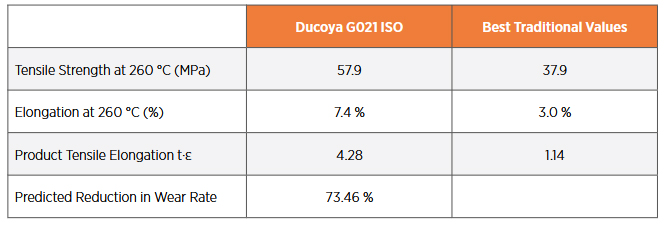
It should be noted that this general hypothesis applies only to materials of the same type (in this case, PMDA-ODA polyimides) and only when tested under identical conditions. Further work will determine whether this prediction holds for Ducoya G021 in comparison with other PMDA-ODA polyimide polymers.
Why would this be important to Battery Electric Vehicles?
As BEVs increase in torque, while package space and cost must decrease, this can lead to higher PV values as the available load area diminishes. This also reduces the weight of single-speed and multi-ratio transmissions. Epicyclic transmission layouts may particularly benefit from this improvement. Furthermore, Ducoya, being wear-resistant, although still relatively soft compared to metal, allows metallic debris, such as burrs and wear particles from gears, to embed in its material and be removed as contaminants from the lubricating oil. While this embedding must be limited, removing metallics before they can interfere with the proper functioning of the electric motor – often sharing the same lubricating oil as the transmission – can only be beneficial.
Conclusion
An interesting new material that adds a new dimension to accessibility and performance in automotive applications. Here, we have focused on mechanical and tribological properties.
Future Work
Future publications will describe why this unusual and newly applied process using supercritical carbon dioxide should lead to such improved mechanical and tribological performance.
Opportunities arising from the resulting electrical performance in conjunction with the latest high-precision
moulding techniques will be highlighted.
In addition, test results will be published in which the relationship between t·ε2 and wear rates in various
situations, as described above, will have been investigated.
1 DuPont Vespel® SP-21 ISO Reference No. VPE-A10863-00-B0614 published 2010 and 2021.